



What's Happening?
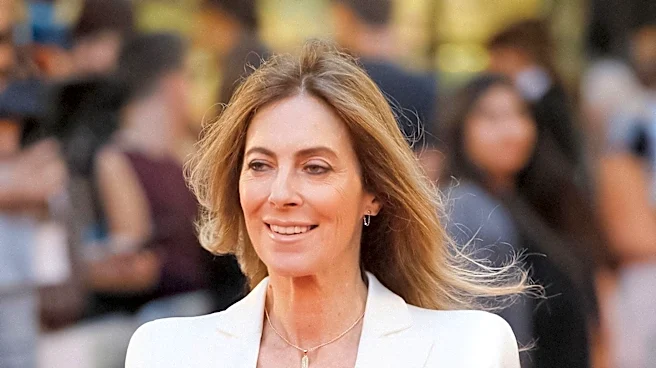
A coalition of Hollywood filmmakers, executives, and actors has been secretly meeting with Silicon Valley executives for three years to establish a framework for AI use in the entertainment industry. Led by LucasFilm pioneer Kathleen Kennedy and American
Film Institute dean Susan Ruskin, the group recently concluded a meeting with approximately 120 participants, resulting in a framework that defines how AI is currently used and how humans can maintain control over future applications. The framework, titled 'Human Generative Workflows,' aims to stimulate industry discussion and provide a common vocabulary for understanding authorship in the era of generative AI. It distinguishes between AI as a tool to serve human creative vision and AI as a prompt-based generative tool that replaces human creative work, asserting that the latter should not be copyrightable.
Why It's Important?
This initiative is crucial for the entertainment industry as it seeks to proactively address the complex challenges and opportunities presented by artificial intelligence. By defining clear boundaries and advocating for human control, the framework aims to mitigate fears among creatives about job displacement and the devaluation of human artistry. The distinction between AI as a tool versus a replacement for human work could significantly influence future copyright laws and compensation structures for artists. This collaborative effort between Hollywood and Silicon Valley signals a serious commitment to shaping the ethical and practical integration of AI, potentially setting a global standard for how creative industries approach this transformative technology.
What's Next?
The publication of the 'Human Generative Workflows' framework is intended to spark widespread discussion within the film, music, sound, and writing industries. The group hopes this will lead to a shared approach to the future of the creative process, including conversations about artist consent and compensation for the use of their likenesses for generative purposes. While the current framework does not address issues like AI model training or job impact, it lays the groundwork for future discussions and potential policy developments. The ongoing engagement of industry leaders and creative professionals suggests that more public discourse and potentially new industry standards or regulations regarding AI's role in entertainment are on the horizon.
Beyond the Headlines
The 'Human Generative Workflows' framework delves into the fundamental question of what constitutes authorship and creativity in an increasingly AI-driven world. By asserting that AI-generated assets that substitute human creative work are not copyrightable, the group is attempting to preserve the intrinsic value of human contribution. This could have profound legal and cultural implications, influencing how intellectual property is defined and protected in the digital age. The initiative also highlights the tension between technological advancement and the human desire for authentic creative expression, potentially leading to a re-evaluation of the roles of artists and technologists in shaping future entertainment experiences. It underscores the need for a nuanced understanding of AI, moving beyond a simplistic 'good or bad' dichotomy to a more sophisticated classification of its various applications.