




What's Happening?
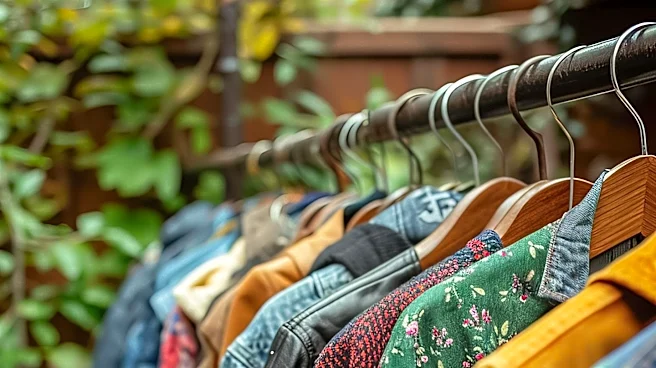
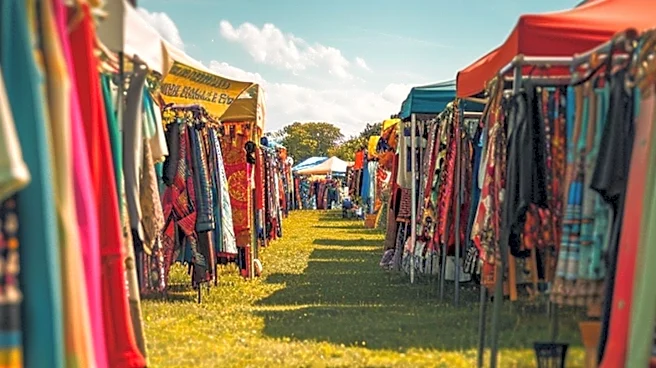
California-based technology companies have significantly transformed the secondhand clothing market, turning thrifted items into a booming fashion trend. Companies like San Francisco's RealReal, Redwood City's Poshmark, and Oakland's ThredUp have leveraged
Silicon Valley innovation to streamline the process of listing, finding, and delivering pre-owned products. This technological integration has contributed to a 20% growth in the secondhand clothing market over the last five years, reaching over $240 billion, according to McKinsey & Co.'s State of Fashion report. These platforms offer features such as livestream shopping and AI-powered search, making thrifting more accessible and appealing to a wider audience, including those willing to pay luxury prices for used items.
Why It's Important?
The rise of tech-driven secondhand fashion platforms has profound implications for the U.S. retail industry and consumer behavior. It challenges the traditional model of newness in fashion, with resale growing at four times the speed of conventional retail. This shift is driven by consumers' desire to save money, reduce waste, and find unique items that differentiate their style from mass-produced trends. The success of companies like Reformation, which transitioned from a vintage boutique to a billion-dollar company, demonstrates the economic viability and growing mainstream acceptance of sustainable fashion. This trend also impacts luxury brands, as their items retain value and find new life in the resale market, potentially influencing their production and marketing strategies.
What's Next?
The secondhand fashion market is expected to continue its rapid growth, with companies increasingly investing in artificial intelligence to enhance operations and reduce costs. ThredUp uses AI to sort millions of clothing pieces, while RealReal's 'MyCloset' feature tracks the value of users' clothing. Poshmark has partnered with Silvr for AI-powered outfit searches. These technological advancements aim to improve efficiency and user experience, further integrating secondhand shopping into mainstream retail. As younger generations, described as 'resale natives,' increasingly embrace this model, the stigma associated with used clothing is diminishing, suggesting a long-term shift in consumer preferences and a continued expansion of the market.
Beyond the Headlines
The boom in secondhand fashion, propelled by California tech, signifies more than just a commercial trend; it represents a cultural and ethical evolution in consumerism. It addresses growing concerns about environmental sustainability by promoting circular fashion and reducing textile waste. The 'thrill of the hunt' for unique, rare items also taps into a desire for individuality and a rejection of fast fashion's homogenization. This movement fosters a community of conscious consumers who value longevity and ethical consumption. However, challenges remain, such as the need for these companies to improve their economic models and profitability, as highlighted by the recent stock performance of RealReal and ThredUp. The long-term success will depend on balancing technological innovation with sustainable business practices and continued consumer engagement.