


What's Happening?
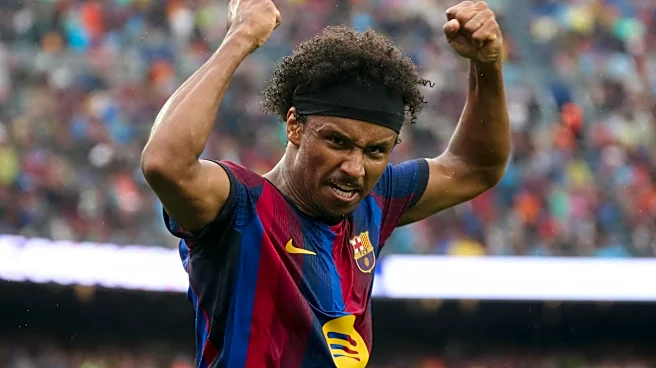
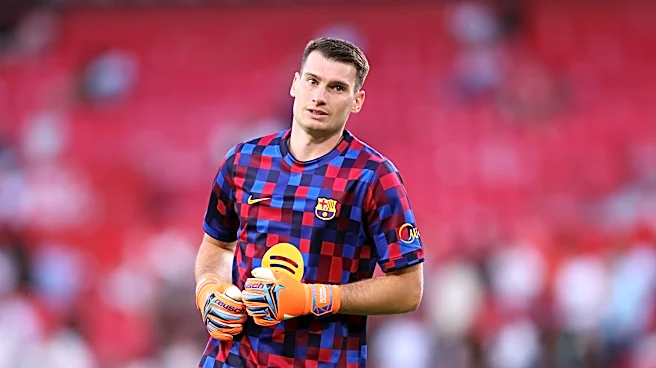
FC Barcelona's economic vice-president, Ferran Olive, has stated that the club will need to sell players if they intend to make new signings in the upcoming January transfer window. Despite the recent closure of the summer transfer window, there has been
speculation about Barcelona's interest in players like Julian Alvarez or the addition of another defender. Olive confirmed to Cadena Ser that while the club expects to have a positive Financial Fair Play record by January, further investment in the squad would necessitate player sales. This financial strategy is part of a broader effort to stabilize the club's economic situation, which has been a challenge for the past five years, moving from a negative to a balanced fair play record. The club's president, Joan Laporta, and sporting director, Deco Anderson Luis de Souza, are overseeing these financial decisions.
Why It's Important?
This development highlights the ongoing financial challenges faced by major European football clubs, even those with significant global fan bases like FC Barcelona. The necessity of selling players to fund new acquisitions underscores the strictures of Financial Fair Play regulations, which aim to prevent clubs from spending beyond their means. For U.S. sports fans and investors, this situation illustrates the complex interplay between sporting ambition and financial prudence in professional sports. It also impacts the global transfer market, as player sales from a club of Barcelona's stature can trigger a chain reaction of transfers across leagues, potentially affecting the availability and valuation of players for U.S. teams or leagues looking to attract international talent. The club's focus on completing the Camp Nou renovation to boost revenue also demonstrates a long-term strategy to enhance financial stability through infrastructure development and increased commercial opportunities.
What's Next?
FC Barcelona will likely assess its current squad to identify players who could be sold in the January transfer window to generate funds for new signings. This process will involve strategic decisions by the club's management, including President Joan Laporta and Sporting Director Deco Anderson Luis de Souza, regarding which players are deemed expendable and which positions require reinforcement. Simultaneously, the club will continue its efforts to complete the renovation of Camp Nou, which is seen as a crucial step to increase revenue through enhanced matchday experiences, sponsorship opportunities, and merchandise sales. The success of these financial and infrastructural initiatives will determine Barcelona's ability to compete for top talent and maintain its competitive edge in European football.
Beyond the Headlines
The situation at FC Barcelona reflects a broader trend in professional football where financial sustainability is increasingly prioritized alongside sporting success. The emphasis on Financial Fair Play and the need for clubs to generate their own revenue streams, rather than relying solely on external investment, points to a maturing financial landscape in the sport. This could lead to more strategic player development and a greater focus on youth academies, as clubs seek cost-effective ways to build competitive squads. For fans, it means a potential shift in transfer market dynamics, with less emphasis on blockbuster signings and more on shrewd financial management. The club's commitment to infrastructure projects like the Camp Nou renovation also signifies a long-term vision for growth, transforming the club into a more diversified entertainment and commercial entity beyond just football matches.