

What's Happening?
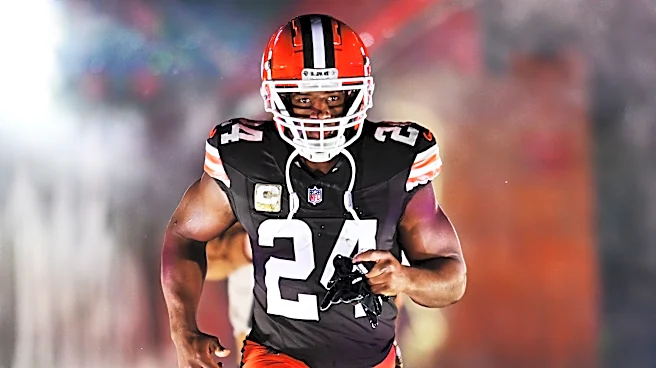
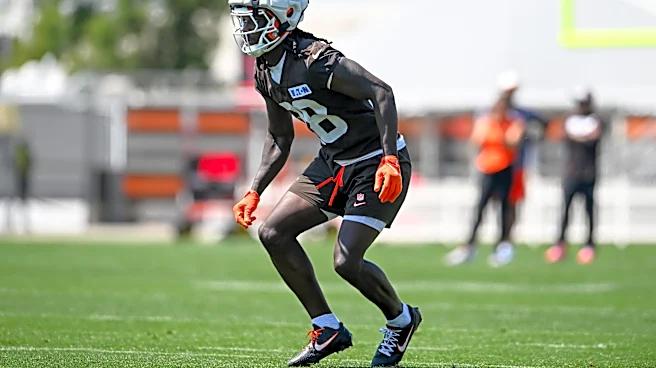
Nick Chubb, a prominent NFL running back, announced his retirement on Friday, concluding a career that saw him become one of only four players in league history to achieve over 1,000 carries with an average of more than five yards per carry. Chubb retired
with 7,349 rushing yards on 1,462 carries, averaging 5.03 yards per carry. He burst onto the scene as a rookie with the Browns in 2018, maintaining an average of over five yards per carry for his first six seasons. His career trajectory was significantly impacted by a severe knee injury in 2023, which affected his performance upon his return in 2024 and ultimately lowered his career average. Despite the injury, Chubb's career statistics place him in an exclusive group alongside legendary running backs such as Jamaal Charles, Jim Brown, and Joe Perry, who also met the 1,000-carry and 5-yards-per-carry milestones.
Why It's Important?
Chubb's retirement marks the end of a highly efficient and impactful career, highlighting the physical demands and inherent risks faced by NFL running backs. His ability to consistently average over five yards per carry for the majority of his career underscores his exceptional talent and efficiency, placing him in a rare category of players. This achievement is particularly significant in a league where the average career length for running backs is relatively short due to the high-impact nature of the position. His early retirement, influenced by a major injury, serves as a reminder of the fragility of athletic careers and the long-term health considerations for professional athletes. For the Cleveland Browns, Chubb's departure leaves a significant void in their offensive strategy, requiring them to adapt and find a replacement for a player who was a cornerstone of their running game for years.
What's Next?
Following Chubb's retirement, the Cleveland Browns will need to address the significant gap left in their running back corps. This will likely involve evaluating their current roster for potential replacements, exploring free agency options, or considering draft prospects in upcoming NFL drafts. The team's offensive strategy may also undergo adjustments to compensate for the loss of Chubb's unique blend of power and efficiency. For Chubb himself, his retirement at 30 suggests a focus on long-term health and well-being, moving beyond the rigorous demands of professional football. His legacy as one of the most efficient running backs in NFL history will continue to be discussed, particularly in the context of how injuries can curtail even the most promising careers.
Beyond the Headlines
Chubb's career, though cut short by injury, exemplifies the ongoing debate about the value and longevity of the running back position in modern NFL football. His exceptional efficiency per carry, despite not accumulating Hall of Fame-level total yardage, prompts a re-evaluation of how greatness is measured for running backs. The impact of his 2023 knee injury underscores the broader issue of player safety and the long-term health implications for athletes in high-contact sports. His decision to retire, rather than attempt to prolong a career potentially compromised by injury, highlights a growing trend among athletes prioritizing post-career quality of life. This situation could further fuel discussions within the league and players' associations regarding injury prevention, rehabilitation protocols, and post-career support for athletes.