



What's Happening?
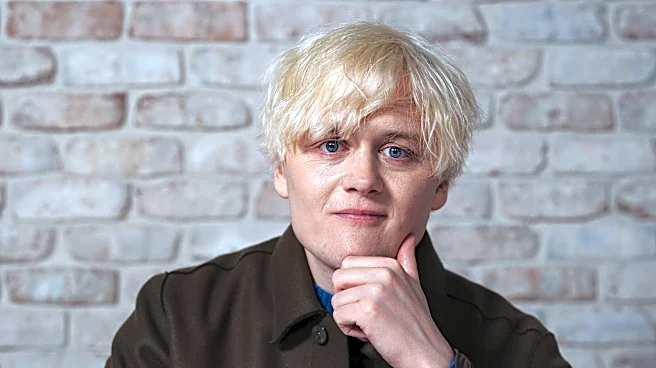
Oobah Butler, known for orchestrating viral hoaxes, has released a new HBO miniseries titled 'Oobah: Scams for a Better Tomorrow,' produced by A24. The series, which premiered on November 22, follows Butler as he scams his way through five different industries:
wellness, wine, dating apps, music, and royalty. Each episode is structured like a 'Shark Tank' presentation, where Butler pitches absurd ideas that satirize their respective fields. For instance, in one episode, he pitches a skin serum made from children's tears to the wellness industry, and in another, he creates a fake dating app that purports to use AI but actually connects users directly. Butler's approach combines comedy and journalism, aiming to challenge viewers' perceptions of how the world works. He often employs manipulation tactics and code-switching, drawing comparisons to figures like Nathan Fielder.
Why It's Important?
The miniseries is important because it critically examines and satirizes the erosion of trust in cultural standards and the susceptibility of various industries to deceptive practices. By presenting outlandish scams, Butler highlights how easily consumers and even investors can be swayed by marketing and perceived authority, particularly in sectors like wellness and technology. The show's 'punching up' against the wealthy and established systems can provoke discussions about ethical consumption, corporate responsibility, and the influence of social media and influencer culture. It also underscores the growing trend of 'hybrid' content that blends comedy with investigative journalism, offering a unique lens through which to view societal issues. The series' success could encourage more creators to explore similar formats, further blurring the lines between entertainment and social commentary.
What's Next?
The miniseries is expected to continue sparking conversations about the nature of scams, consumer gullibility, and the ethics of various industries. Its satirical approach may lead to increased scrutiny of marketing claims and business practices, particularly in the wellness and tech sectors. The show's unique blend of comedy and journalism could also influence future documentary and reality television formats, encouraging more creators to use humor as a tool for social critique. Viewers may become more discerning about products and services, especially those with exaggerated claims, after witnessing Butler's elaborate deceptions. The series' impact could extend to how companies present themselves and how consumers evaluate authenticity in a world increasingly shaped by digital influence and viral trends.
Beyond the Headlines
Beyond its immediate entertainment value, 'Oobah: Scams for a Better Tomorrow' delves into deeper implications concerning the psychological aspects of trust and belief. The series implicitly questions why individuals are so willing to accept improbable claims, especially when presented with a veneer of authority or scientific jargon. It touches upon the ethical boundaries of journalism and art, as Butler's methods involve active deception, albeit with a stated goal of social commentary. The show also subtly critiques the culture of 'fake it till you make it' prevalent in some entrepreneurial circles, where the appearance of innovation can sometimes overshadow genuine substance. The use of a black turtleneck by Butler, a symbol associated with figures like Steve Jobs and Elizabeth Holmes, further emphasizes the show's exploration of how superficial cues can manipulate perception and foster misplaced trust.