





What's Happening?
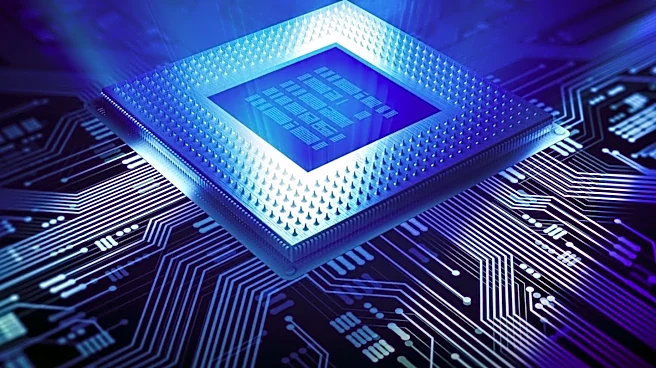
Texas Instruments has introduced two new processors, the AM62A and AM68A, which power credit card-sized Edge AI single board computers (SBCs) designed for AI Vision applications. The AM62A processor delivers 2 TOPS of AI performance, while the AM68A offers
8 TOPS. These processors are integrated into the InHand Mo 62A and Mo 68A SBCs, which support MIPI CSI camera input and Raspberry Pi HAT expansion boards. They are equipped with advanced image processing capabilities and can handle H.264 and H.265 video encoding and decoding. The target applications for these SBCs include industrial equipment, access control systems, robots, smart cameras, and visual inspection terminals. The processors are designed to enhance AI capabilities in compact devices, making them suitable for a variety of industrial and commercial uses.
Why It's Important?
The introduction of these processors by Texas Instruments is significant as it enhances the capabilities of compact AI devices, which are increasingly important in various industries. The ability to deliver high AI performance in a small form factor allows for more efficient and versatile applications in fields such as industrial automation, security, and robotics. This development could lead to more widespread adoption of AI technologies in sectors that require compact and powerful computing solutions. Additionally, the processors' support for advanced image processing and video encoding capabilities makes them ideal for applications that rely on visual data, further expanding their potential use cases.
What's Next?
As these processors become integrated into more devices, we can expect to see an increase in the deployment of AI-driven solutions across various industries. Companies may begin to explore new applications and innovations that leverage the enhanced AI capabilities provided by these processors. Additionally, Texas Instruments may continue to develop and release more advanced processors to meet the growing demand for AI technologies in compact devices. The success of these processors could also encourage other semiconductor companies to invest in similar technologies, leading to increased competition and innovation in the market.