








What's Happening?
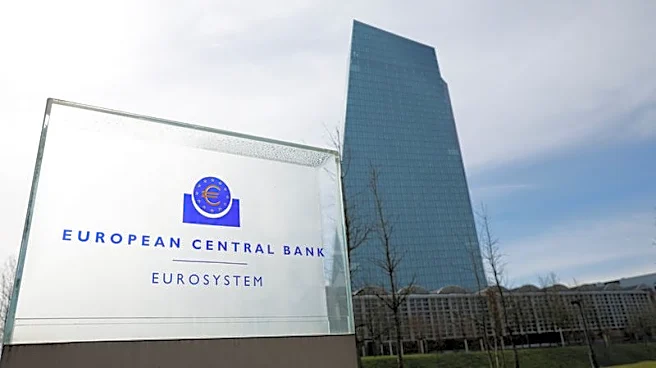
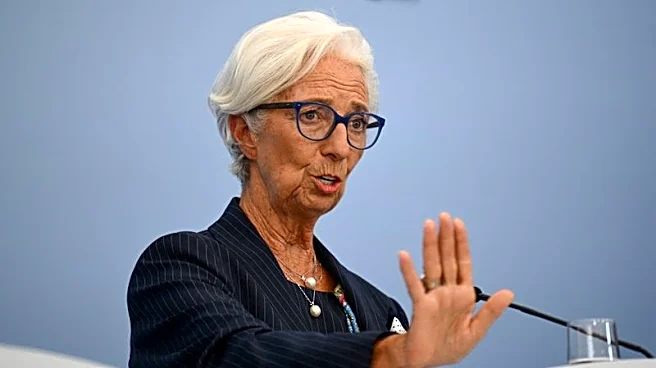
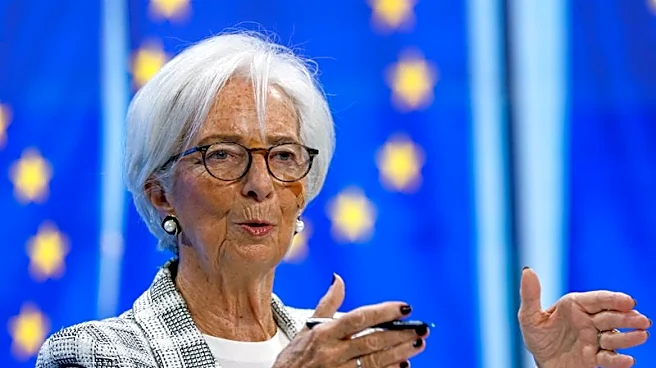
Christine Lagarde, President of the European Central Bank (ECB), has announced her resignation effective February 7, 2027, approximately nine months before her eight-year term concludes. Her tenure, which began in November 2019, was marked by significant
economic challenges including the COVID-19 pandemic, the war in Ukraine, and multiple energy crises that fueled inflation. Despite these hurdles, Lagarde is largely credited with effective crisis management, maintaining financial stability in the eurozone, and advocating for the euro's role in international payment transactions. However, her record on managing inflation is considered more complex. The ECB initially misdiagnosed post-COVID price spikes as 'transitory' in late 2021 and early 2022, leading to a delayed response as inflation accelerated to a record 10.6 percent by October 2022. The ECB later implemented a resolute monetary tightening program, increasing policy rates by 450 basis points, which successfully brought inflation down to 2.4 percent by November 2023 without triggering a recession.
Why It's Important?
Lagarde's departure and her legacy hold significant implications for global financial markets, including those in the U.S. Her efforts to promote the euro in international payment transactions, particularly against the dominance of U.S. platforms like Visa and Mastercard, reflect a broader geopolitical trend towards diversifying global financial systems. This push for European monetary sovereignty could influence the competitive landscape for U.S. financial technology companies and payment processors. Furthermore, the ECB's experience under Lagarde in managing inflation during periods of unprecedented global upheaval offers critical lessons for central banks worldwide, including the U.S. Federal Reserve. The initial misjudgment of inflationary pressures, followed by aggressive monetary tightening, highlights the delicate balance central banks must strike to maintain price stability without stifling economic growth. The success of the ECB's Pandemic Emergency Purchase Program (PEPP) in stabilizing European bond markets also provides a case study for future crisis interventions, potentially informing U.S. policymakers on strategies to prevent financial fragmentation.
What's Next?
The search for Lagarde's successor will be a critical development, as the new ECB President will inherit ongoing challenges, including potential renewed inflation risks from energy prices. The ECB's recently warned about these risks, indicating that the fight against inflation is not over. The effectiveness of the Transmission Protection Instrument (TPI), introduced under Lagarde to prevent unwarranted divergences in borrowing costs among euro area member states, remains to be fully tested. Its future application and market reception will be closely watched. Additionally, the continued development of a digital euro and wholesale central bank digital currency, initiatives championed by Lagarde, will proceed. These developments could further shape the future of international payments and financial markets, potentially influencing how U.S. financial institutions and regulators approach similar digital currency initiatives. The transition will also provide an opportunity for the ECB to reassess its monetary policy framework and communication strategies in light of past experiences.
Beyond the Headlines
Lagarde's tenure at the ECB underscores the evolving role of central banks in an increasingly interconnected and volatile global economy. Her emphasis on building consensus within the ECB's governing council, a departure from her predecessor's more top-down approach, highlights a shift towards more collaborative governance in complex financial institutions. The debate surrounding the 'transitory' nature of inflation and the subsequent aggressive tightening by the ECB, mirroring initial missteps by the U.S. Federal Reserve, reveals the inherent difficulties in forecasting and responding to economic shocks in real-time. This period also brought to the forefront the strategic importance of monetary sovereignty and financial stability in an era dominated by a few global payment platforms. The push for a stronger international role for the euro, including through digital currency initiatives, reflects a broader geopolitical ambition to reduce reliance on U.S.-centric financial infrastructure, potentially leading to a more multipolar global financial system in the long term.