
What's Happening?
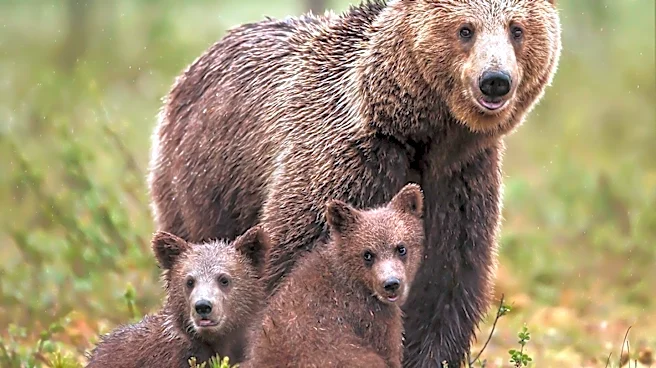
Recent incidents at Brooks River in Alaska's Katmai National Park have seen mother bears killing cubs that are not their own, marking the first documented cases of female-perpetrated infanticide in the area.
Experts are puzzled by these events, which have been observed via live bear cams. Theories suggest that unwanted adoption of cubs and dominance hierarchies among bears may play roles in these behaviors. The incidents highlight the complex social dynamics of bears and the challenges of interpreting their actions through a human lens.
Why It's Important?
These incidents provide a rare glimpse into the social behaviors of bears, offering valuable insights for wildlife researchers and conservationists. Understanding the factors that drive such behaviors can inform management strategies in national parks and wildlife reserves. The events also serve as a reminder of the unpredictable and sometimes harsh realities of nature, challenging viewers to reconsider their perceptions of wildlife. As human activity increasingly intersects with natural habitats, such insights are crucial for developing effective conservation policies.
Beyond the Headlines
The infanticide incidents at Brooks River raise broader questions about the impact of environmental changes on wildlife behavior. Factors such as food scarcity and habitat disruption could influence bear interactions, potentially leading to more aggressive behaviors. These events also highlight the ethical considerations of wildlife observation and the importance of maintaining a respectful distance from natural processes. As climate change and human encroachment continue to affect ecosystems, understanding these dynamics becomes increasingly important for conservation efforts.