








What's Happening?
Zoo Atlanta is set to open the Arthur M. Blank Panda Grove to the public on Friday, November 6, introducing its newest giant pandas, Ping Ping and Fu Shuang. The pair arrived from China after a 16-hour journey and have since completed their quarantine
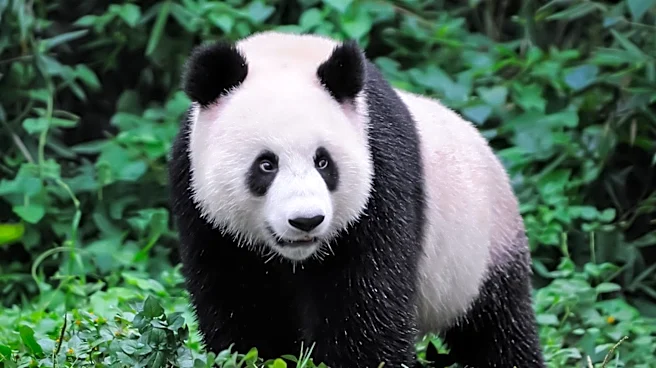
period, adjusting to their new habitat. The Panda Care Team has provided tips for visitors to distinguish between the two pandas: female Fu Shuang has a rounder face with a distinctive fur ridge between her ears, while male Ping Ping is noticeably larger and has a 'Y'-shaped marking on the bridge of his nose. This opening marks Atlanta's first opportunity to see the new pandas in their dedicated grove.
Why It's Important?
The arrival and public debut of Ping Ping and Fu Shuang are significant for Zoo Atlanta and the city. Giant pandas are a major draw for zoos, attracting large numbers of visitors and generating considerable public interest. Their presence contributes to conservation efforts, raising awareness and funds for endangered species. For Zoo Atlanta, these pandas represent a continuation of its long-standing commitment to giant panda conservation and research, reinforcing its status as a leading zoological institution. The opening of the Arthur M. Blank Panda Grove also provides a new educational and recreational opportunity for the community, fostering a connection between the public and wildlife conservation.
What's Next?
The Arthur M. Blank Panda Grove will officially open to the public on Friday, November 6. Visitors will then have the opportunity to observe Ping Ping and Fu Shuang in their new habitat and apply the distinguishing features provided by the Panda Care Team. Zoo Atlanta anticipates that visitors may even discover their own unique ways to tell the pandas apart. The zoo will continue its daily operations, with all proceeds from related fundraising efforts, such as a limited-edition panda T-shirt fundraiser, supporting the care of the giant pandas and other animals at the zoo.
Beyond the Headlines
The presence of giant pandas in U.S. zoos often symbolizes broader diplomatic and scientific collaborations between the United States and China. These 'panda diplomacy' initiatives facilitate international cooperation in wildlife conservation and research, contributing to the global understanding and protection of endangered species. The public's engagement with these animals can also inspire a deeper appreciation for biodiversity and the critical need for conservation efforts worldwide. The long-term impact extends to scientific studies on panda behavior, reproduction, and habitat preservation, which are crucial for the survival of the species in the wild.