






What's Happening?
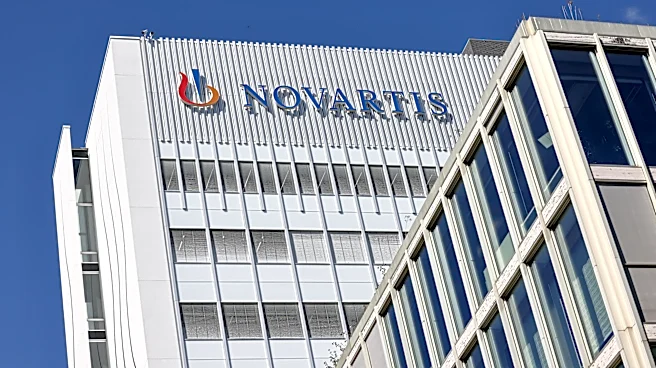
Novartis has updated its mid-term financial guidance, projecting a 5% compound annual growth rate (CAGR) in net sales through 2031. The pharmaceutical company also anticipates its core operating income margin to exceed 40% by 2029. This revised outlook,
announced at the 'Meet Novartis Management' event in London, is attributed to the strong performance of existing growth drivers and upcoming product launches. Notably, Novartis has increased its peak sales guidance for three key brands: Kesimpta, now projected at $8 billion (up from $6 billion); Scemblix, raised to $5 billion (from $4 billion); and Leqvio, also increased to $5 billion (from $4 billion). These adjustments follow a recent upgrade for Rhapsido/remibrutinib, which now has an $8 billion peak sales guidance across multiple indications. The company currently boasts nine in-market assets with peak sales potential ranging from $3 billion to $10 billion.
Why It's Important?
This updated guidance from Novartis signals strong confidence in its product pipeline and market strategy, which could have significant implications for the pharmaceutical sector and investors. Increased sales projections for key drugs like Kesimpta, Scemblix, and Leqvio suggest robust demand and market penetration, potentially leading to higher revenues and profitability for Novartis. For the broader U.S. healthcare market, the success of these innovative medicines could mean improved treatment options for patients with conditions such as multiple sclerosis, chronic myeloid leukemia, and cardiovascular diseases. Investors may view this positive outlook as a sign of stability and growth potential, possibly influencing stock performance and investment decisions within the pharmaceutical industry. The company's ability to navigate patent expirations and maintain growth through new product development is crucial for its long-term sustainability and competitive standing.
What's Next?
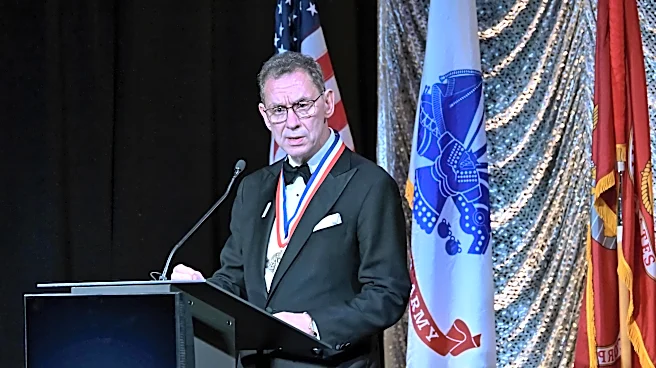
Novartis plans to highlight its strategy and performance update at the 'Meet Novartis Management' event, where CEO Vas Narasimhan will discuss the company's approach, including the scaling of AI across its operations. The company expects over 35 potentially submission-enabling readouts through 2031, with more than 30 high-value pipeline assets, including 10 in late-stage development with multi-billion-dollar peak sales potential. These pipeline assets span cardiovascular-renal-metabolic, immunology, neuroscience, and oncology therapeutic areas. The continued advancement of these programs is expected to sustain mid-single-digit sales growth over the long term. Investors and analysts will be closely watching these developments and the company's ability to execute on its ambitious pipeline to maintain its growth trajectory.
Beyond the Headlines
The emphasis on scaling AI across research, development, manufacturing, and commercial operations by Novartis points to a broader trend within the pharmaceutical industry. The integration of artificial intelligence could revolutionize drug discovery, clinical trials, and market strategies, potentially accelerating the development of new therapies and optimizing operational efficiencies. This strategic shift could lead to more personalized medicine approaches and a more data-driven understanding of disease. However, it also raises questions about data privacy, ethical considerations in AI-driven healthcare, and the potential impact on the workforce. The success of Novartis's AI initiatives could set a precedent for other pharmaceutical companies, influencing the future landscape of medical innovation and patient care.