


What's Happening?
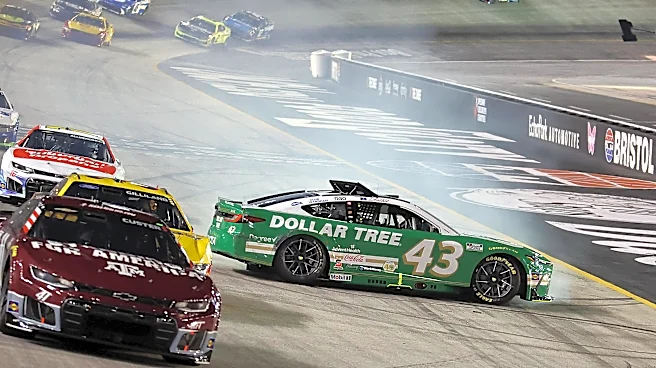
NASCAR Senior Vice President of Competition Elton Sawyer has indicated that the sanctioning body is working to improve its real-time officiating process for on-track incidents. This comes after recent brake-checking incidents involving Carson Hocevar
and Josh Berry at Martinsville, which led to delayed penalties and fan dissatisfaction. Hocevar was fined $100,000 and lost 25 championship points, while Berry received a $50,000 fine and also lost 25 points for behavioral violations. Spire Motorsports had already suspended Hocevar for the season finale prior to NASCAR's announcement. Sawyer acknowledged that NASCAR needs to do a better job of intervening during races, leveraging the extensive data available from cars to make quicker and more accurate decisions. He expressed a desire to avoid post-race discussions about penalties and instead focus on championship outcomes. The incidents highlighted a gap in NASCAR's officiating, moving away from the traditional 'Boys, have at it' philosophy as drivers have begun to weaponize on-track actions.
Why It's Important?
The push for real-time penalties signifies a significant shift in NASCAR's approach to race management and driver conduct. Historically, NASCAR has often reviewed incidents post-race, leading to delays and frustration among fans and teams. Implementing real-time officiating could enhance the integrity of races by immediately addressing dangerous or unsportsmanlike conduct, potentially preventing further incidents and ensuring fairer competition. This change could impact driver behavior, encouraging more disciplined racing and reducing retaliatory actions. For teams, clearer and faster rulings mean less uncertainty about race outcomes and championship standings. The move also reflects NASCAR's adaptation to technological advancements, utilizing data analytics to improve decision-making, which could set a precedent for other motorsports. The credibility of the sport is at stake, as prolonged delays in disciplinary action can erode fan trust and perception of fairness.
What's Next?
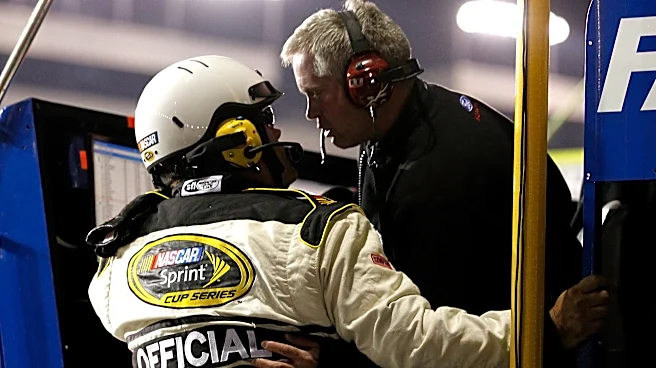
NASCAR plans to continue developing its capabilities to process in-race data and information live, aiming to make disciplinary decisions during the race itself rather than days later. This involves refining the tools and processes used by officials like Scott Miller and his team at the NASCAR production facility. The goal is to ensure accuracy in judgment while speeding up intervention. Future seasons, particularly the 2027 season, will likely see the implementation and refinement of these new officiating protocols. NASCAR also faces the challenge of clearly defining the line between aggressive racing strategies and intentional acts of sabotage, especially concerning the use of new car components like softer bumpers. The racing community will be closely watching to see how effectively NASCAR can balance swift action with accurate judgment, aiming to prevent a recurrence of the post-race drama seen after Martinsville.
Beyond the Headlines
The debate over real-time penalties touches upon deeper ethical and legal considerations within competitive sports. The concept of 'intent' is crucial in determining penalties, and NASCAR's reliance on extensive data, in-car information, and radio communications aims to establish this intent definitively. This raises questions about the balance between objective data and subjective interpretation in high-stakes environments. Furthermore, the evolution of NASCAR's officiating reflects a broader trend in professional sports towards increased scrutiny and accountability for athlete behavior, driven by technological capabilities and public demand for fairness. The challenge for NASCAR will be to implement these changes without stifling the competitive spirit that is a hallmark of the sport, ensuring that drivers can still race hard without resorting to dangerous tactics. This ongoing adaptation will shape the future of NASCAR's competitive landscape and its relationship with both drivers and fans.