







What's Happening?
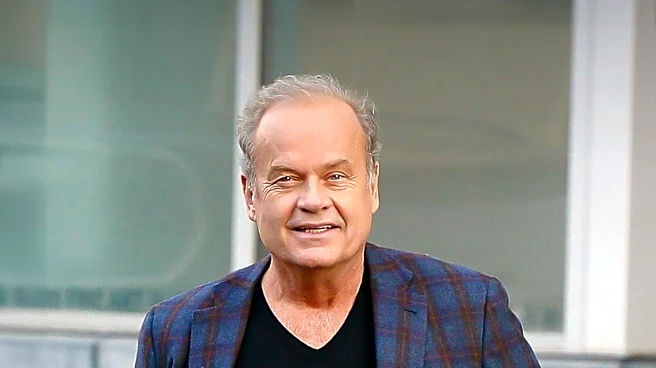
Kelsey Grammer, known for his extensive acting career spanning over 40 years, is set to make his directorial debut with a feature film described as a 'Civil War epic.' The project centers on the true story of Albert Townsend, a Union soldier who, according
to Grammer, was unjustly denied the Medal of Honor due to a 'clerical error.' Grammer discovered Townsend's story through his descendants' archival research and was compelled by the narrative of friendship, courage, and an unassuming man's principles under fire. The film aims to tell this story on a grand scale, promising 'real cannons, one hundred horses and the cast in period-accurate uniforms.' Mark Huffam, known for his work on 'Saving Private Ryan' and 'Game of Thrones,' has been brought on as a producer. The script is complete, and the film is slated to enter production, with Grammer actively seeking investors through Republic to fund the project. Investors are offered various 'bonus perks' depending on their contribution, ranging from community access for $100 to executive producer credit and a group dinner with Grammer for $25,000, which also includes the opportunity to fire a historic cannon on set.
Why It's Important?
This venture marks a significant career shift for Kelsey Grammer, moving from a celebrated acting career to directing a large-scale historical drama. The film's focus on a Civil War narrative, particularly one highlighting an overlooked Union soldier, could contribute to a renewed public interest in American history and the untold stories within it. The involvement of an experienced producer like Mark Huffam suggests a commitment to high production values, potentially attracting a wide audience. The unique crowdfunding approach, inviting public investment with tiered perks, democratizes film financing to some extent, allowing fans and interested parties to directly contribute to and feel a part of the production. This model could influence future independent film financing strategies, especially for projects with broad appeal. Furthermore, the project's backing of a campaign for Albert Townsend to receive a posthumous Medal of Honor adds a layer of social and historical advocacy, potentially bringing long-overdue recognition to a historical figure.
What's Next?
The immediate next step for Kelsey Grammer's Civil War epic is to secure the necessary investments to move forward with production. With the script already written and Mark Huffam on board as producer, the focus will be on attracting sufficient funding through the Republic platform. Once funding is secured, the film will proceed into its production phase, which will involve casting, set construction, and filming. The campaign to posthumously award Albert Townsend the Medal of Honor will likely continue in parallel with the film's development, potentially gaining momentum as the project garners more public attention. The success of this investment model could also pave the way for similar projects in the future, where established figures in entertainment leverage their platforms to fund ambitious films directly through public investment.
Beyond the Headlines
Kelsey Grammer's decision to direct a Civil War epic, particularly one focused on correcting a historical injustice, delves into themes of historical revisionism and the power of storytelling to influence public perception and historical records. The film's narrative, centered on an 'unassuming young man becoming a soldier who held his ground and his principles,' speaks to universal themes of courage, honor, and the often-overlooked contributions of ordinary individuals during extraordinary times. The project's dual aim of producing a major film and advocating for a posthumous Medal of Honor highlights the intersection of entertainment and social activism. This approach could set a precedent for how historical narratives are brought to the screen, not just as entertainment but as a means to address past wrongs and inspire contemporary discussions about justice and recognition. The use of public investment also raises questions about the evolving landscape of film financing and the potential for greater audience engagement in the creative process.