
What's Happening?
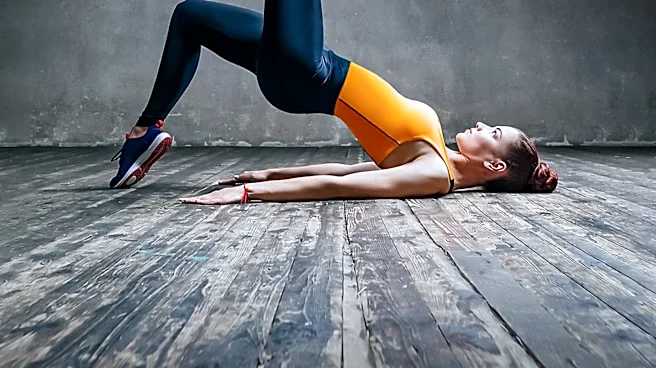
A fitness coach, who has experience working at F45 Training and other studios, emphasizes the significance of single-leg hip thrusts in building strong glutes and hips. Despite initially neglecting this exercise, the coach has reintroduced it into her routine,
finding it beneficial for developing glute strength and stability. The exercise involves using a weight and a bench to perform controlled reps, focusing on proper form to maximize glute activation while protecting the back. The coach advises gradually increasing the load and adjusting reps to enhance muscle growth and stability, highlighting common mistakes such as thrusting too high and improper weight placement.
Why It's Important?
The emphasis on single-leg hip thrusts underscores the importance of targeted exercises in addressing muscle imbalances and enhancing lower body strength. For individuals struggling with glute engagement during workouts, this exercise offers a solution to improve muscle activation and stability. The coach's insights are particularly relevant for fitness enthusiasts and professionals seeking effective methods to strengthen their glutes and prevent injuries. By focusing on proper form and gradual progression, individuals can achieve better hip stability and overall lower body strength, which are crucial for various physical activities and sports.
What's Next?
As the fitness industry continues to evolve, exercises like single-leg hip thrusts may gain more popularity among trainers and fitness programs. The coach's experience and recommendations could influence other fitness professionals to incorporate this exercise into their routines, potentially leading to broader adoption in gyms and training sessions. Additionally, fitness brands like F45 Training might explore integrating such exercises into their high-intensity interval training classes, offering clients more diverse workout options to target specific muscle groups effectively.
Beyond the Headlines
The focus on single-leg hip thrusts highlights a broader trend in the fitness industry towards personalized and targeted training methods. As individuals seek to address specific muscle imbalances and improve their physical performance, exercises that offer unilateral strength development become increasingly valuable. This shift towards more specialized training could lead to innovations in fitness equipment and programs designed to cater to individual needs, promoting a more holistic approach to health and fitness.