
What's Happening?
London-based quantitative hedge fund Qube Research & Technologies is pursuing a U.S. broker-dealer license to engage in options market making, as reported by the Financial Times. This move would position
Qube to compete with established firms like Citadel Securities and Jane Street in the U.S. options market. Obtaining this license would enable Qube to trade directly on exchanges such as Cboe, bypassing the need to operate through a bank. The U.S. listed options market has experienced significant growth, with volume exceeding 15.2 billion contracts in 2025, marking a 26% increase from the previous year and the sixth consecutive record year. Qube, which manages approximately $60 billion, plans to expand its New York team by 25 individuals in anticipation of a launch in the latter half of 2027.
Why It's Important?
Qube's entry into the U.S. options market as a direct market maker signifies increased competition within a highly lucrative sector. The U.S. options market has seen substantial growth, driven by volatility and retail day trading, particularly following the COVID-19 pandemic. The participation of a $60 billion hedge fund like Qube could introduce new strategies and liquidity, potentially impacting pricing and market dynamics for other players. This development also highlights a trend where quantitative funds, traditionally focused on statistical arbitrage, are expanding into market making, blurring the lines between different types of trading firms. The increased competition could benefit market efficiency and potentially offer better pricing for investors, but it also intensifies the battle for market share among major financial institutions.
What's Next?
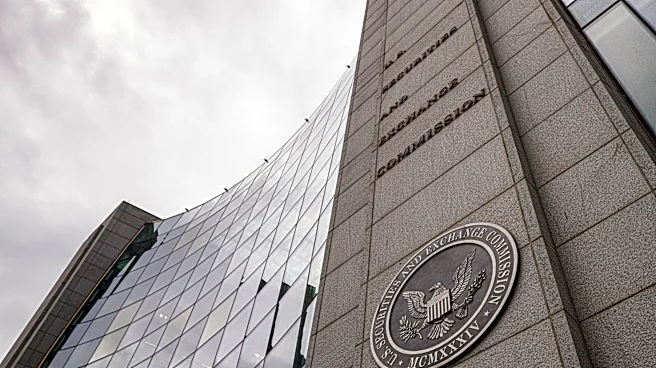
Qube's immediate next step involves securing the U.S. broker-dealer license, which is a prerequisite for direct market making on exchanges. Following this, the firm plans to expand its New York operations by hiring 25 new personnel, with a target launch in the second half of 2027. This expansion will likely involve setting up the necessary technological infrastructure and trading desks to support its options market-making activities. The move is expected to intensify competition with existing market makers, potentially leading to strategic adjustments by firms like Citadel Securities and Jane Street. The Securities and Exchange Commission (SEC) and other regulatory bodies will continue to oversee the options market, ensuring fair practices amidst increasing participation.
Beyond the Headlines
Qube's strategic shift into options market making reflects a broader evolution within the financial industry, where quantitative hedge funds are increasingly leveraging their technological prowess and capital to engage in high-frequency trading and market provision. This trend underscores the growing importance of proprietary trading, which accounted for a significant portion of the sector's revenue in 2025. The move also highlights the ongoing convergence of different financial strategies, as hedge funds adopt market-making roles and traditional market makers explore longer-term positions. This dynamic environment could lead to further innovation in trading strategies and technology, but also raises questions about systemic risk and the concentration of market power among a few dominant firms. The regulatory landscape will need to adapt to these evolving business models to maintain market integrity and stability.