








What's Happening?
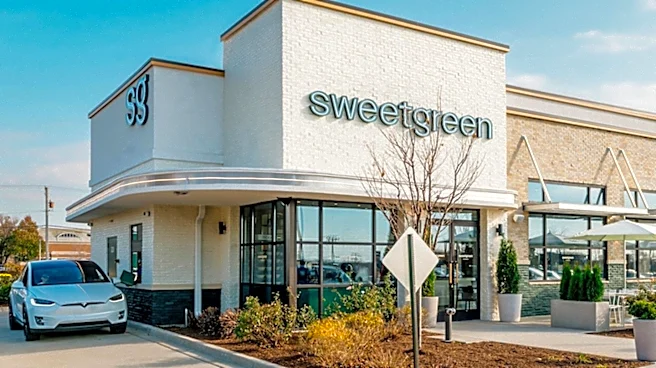
Sweetgreen (NYSE:SG), a casual quick-service chain specializing in healthy salads and bowls, reported mixed results for its second-quarter earnings. The company's revenues reached $192.7 million, marking a 3.8% year-over-year increase, but this figure
fell short of analysts' expectations by 0.6%. Sweetgreen delivered the slowest revenue growth among the modern fast food stocks tracked. The quarter was further characterized by a disappointing performance in full-year EBITDA guidance, which missed analysts' expectations, and a significant miss of analysts' EBITDA estimates. Despite these financial shortfalls, Sweetgreen's stock has seen an increase of 15.1% since the earnings report, currently trading at $6.76. The modern fast food sector, which Sweetgreen belongs to, represents a middle ground between traditional fast food and sit-down restaurants, offering expanded menus with fresher, cleaner ingredients at higher price points.
Why It's Important?
Sweetgreen's Q2 performance highlights the challenges and opportunities within the evolving modern fast food industry. While the company experienced slower revenue growth and missed EBITDA estimates, the subsequent rise in its stock price suggests that investors may be looking beyond immediate financial metrics, potentially focusing on long-term growth potential or market positioning. The modern fast food segment caters to consumers who prioritize quality and healthier options, a demographic that continues to grow. However, Sweetgreen's struggles with revenue growth and EBITDA indicate that even within a favorable market segment, operational efficiency and meeting financial projections remain critical. This situation could prompt Sweetgreen to re-evaluate its growth strategies, cost management, or menu offerings to better align with market expectations and consumer demand. The performance of companies like Sweetgreen, Shake Shack, and Wingstop provides insights into consumer spending habits and preferences in the food service industry, particularly the shift towards perceived healthier and higher-quality fast-casual dining experiences.
What's Next?
Sweetgreen will likely face increased scrutiny regarding its ability to improve revenue growth and meet financial guidance in upcoming quarters. The company may need to implement strategic changes to address the shortfalls identified in its Q2 report. This could involve refining its menu, optimizing operational costs, or expanding its market reach more effectively. The broader modern fast food sector will continue to be a competitive landscape, with companies like Shake Shack demonstrating stronger Q2 performances, reporting revenues of $417.6 million, up 17.2% year-over-year, and beating EPS and EBITDA estimates. Wingstop, another player in the sector, also reported revenues of $185.6 million, though it fell short of analysts' expectations by 2.4%. Sweetgreen's ability to adapt and innovate within this competitive environment will be crucial for its future success. Investors will be closely watching for any new initiatives or revised financial outlooks from Sweetgreen's management.
Beyond the Headlines
Sweetgreen's mixed earnings reflect a deeper trend in consumer behavior and the food industry: the increasing demand for transparency, health-conscious options, and sustainable practices. While the 'modern fast food' concept aims to address these demands, the financial performance of companies within this segment indicates that simply offering healthier options is not enough. Factors such as pricing, operational scalability, and effective market penetration are equally vital. Sweetgreen's stock increase despite missed earnings could also suggest a 'buy the dip' mentality among some investors who believe in the long-term viability of the healthy fast-casual model. This situation highlights the ongoing tension between consumer ideals and business realities in the food sector, where companies must balance ethical sourcing and healthy offerings with profitability and growth. The success or failure of companies like Sweetgreen will shape the future of fast food, potentially pushing the entire industry towards more health-conscious and sustainable practices.