




What's Happening?
Philips Hue has launched new versions of its Play Gradient Lightstrip for televisions, making the technology more accessible and versatile. The updated product line includes a standard Play Gradient Lightstrip, based on Flux technology, and a Play Gradient Lightstrip Pro,
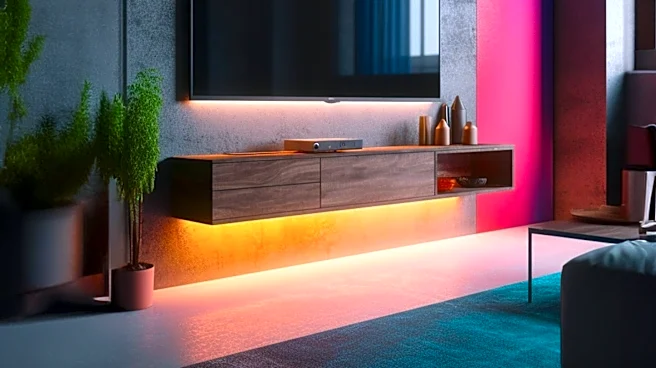
utilizing OmniGlow technology. A significant change is the reduction in price; for instance, the 65-inch standard lightstrip is now priced at 99.99 euros, a substantial decrease from the previous model's 209.99 euros. The Pro version is also more affordable at 159.99 euros. These new lightstrips offer increased flexibility in sizing, with options for TVs up to 100 inches and the ability to be cut at specific intervals (every 12.5 cm for Pro and 16.6 cm for standard) to fit smaller screens, including 43-inch models. Users can also purchase light strip mounts separately to adapt existing Flux or OmniGlow light strips for larger TVs, even up to 200 inches with custom designs. The lightstrips are designed to create immersive wall-washing effects that synchronize with TV content using RGBWWIC technology.
Why It's Important?
The introduction of more affordable and flexible Philips Hue TV lightstrips is important for the smart home and entertainment technology markets. The significant price reduction makes advanced ambient lighting technology more accessible to a broader consumer base, potentially increasing adoption rates for smart lighting systems. The enhanced flexibility in sizing, allowing the lightstrips to be cut to fit various TV dimensions and even adapted for larger custom setups, addresses a previous limitation and expands the product's market appeal. This move by Philips Hue could intensify competition in the smart lighting sector, pushing other manufacturers to innovate and offer more cost-effective and adaptable solutions. For consumers, it means a more personalized and immersive home entertainment experience without the previous high entry cost, potentially influencing purchasing decisions for new televisions and smart home accessories. The integration of RGBWWIC and OmniGlow technologies also signifies a continued push for higher quality and more dynamic lighting effects in consumer products.
What's Next?
The new Philips Hue TV lightstrips are expected to become widely available in the Hue Shop soon, following their initial announcement. As these products roll out, consumers can anticipate more detailed specifications regarding brightness, which are currently not fully disclosed. The increased affordability and flexibility are likely to drive greater consumer interest and sales, potentially leading to further innovations in smart lighting technology from Philips Hue and its competitors. The company may also explore additional integrations with smart home ecosystems and entertainment platforms to enhance the user experience. The ability to cut the lightstrips to size and adapt them for various screen dimensions suggests a future trend towards more customizable and user-friendly smart lighting solutions, moving away from rigid, pre-set configurations. The focus on immersive lighting synchronized with content indicates a continued evolution in how smart lighting enhances media consumption.
Beyond the Headlines
The trend towards more affordable and customizable smart lighting, exemplified by Philips Hue's new TV lightstrips, reflects a broader shift in consumer electronics towards personalization and value. This development could lead to a more integrated and dynamic home environment where lighting is not just functional but an integral part of the entertainment and ambiance. The ability to precisely tailor lighting to screen content and room size blurs the lines between passive viewing and immersive experience, potentially influencing how content creators design visual experiences. Ethically, as smart lighting becomes more pervasive and integrated, questions around data privacy and energy consumption will become more prominent. The increased accessibility of such technology could also lead to a greater demand for interoperability standards across different smart home devices, fostering a more cohesive and user-friendly smart ecosystem. This evolution signifies a move towards intelligent environments that adapt to user preferences and activities, enhancing comfort and engagement in daily life.