





What's Happening?
United Airlines reportedly approached Delta Air Lines about a potential merger, aiming to combine two of the largest U.S. carriers. United CEO Scott Kirby contacted Delta CEO Ed Bastian to discuss the merger, but the talks did not progress beyond preliminary
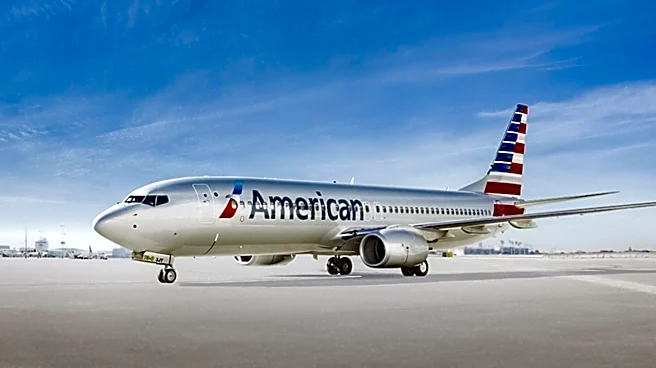
discussions. The Wall Street Journal reported that Delta's leadership evaluated the proposal but ultimately decided not to pursue it further. A merger of this magnitude would have significant implications for the airline industry, likely attracting scrutiny from federal antitrust regulators and state attorneys general. United had also explored a merger with American Airlines earlier this year, which was rejected by American's CEO Robert Isom as 'anticompetitive.' Despite these efforts, Kirby has downplayed the likelihood of a major merger, indicating that United is more focused on acquiring airport slots and other assets rather than pursuing large-scale consolidation.
Why It's Important?
The potential merger between United and Delta would have reshaped the U.S. airline industry, creating a dominant player with extensive reach and resources. Such a merger could lead to increased market concentration, potentially reducing competition and impacting consumer choices and prices. Antitrust concerns would be a significant hurdle, as regulators would closely examine the merger's impact on competition and market dynamics. For United, the merger could have provided an opportunity to expand its global reach and operational capabilities. However, the rejection of the proposal by Delta and the earlier rejection by American Airlines highlight the challenges of achieving such large-scale consolidations in a highly regulated industry. The airline industry is already under pressure from fluctuating fuel prices, labor costs, and evolving consumer preferences, making strategic mergers a complex and risky endeavor.
What's Next?
While United has downplayed the likelihood of pursuing a major merger, the airline remains open to acquiring airport slots and other assets to enhance its operational capabilities. The focus on asset acquisition rather than full-scale mergers suggests a strategic shift towards incremental growth and expansion. Antitrust regulators and industry stakeholders will continue to monitor any consolidation efforts within the airline industry, ensuring that competition remains fair and consumer interests are protected. United's future strategies may involve partnerships, alliances, or smaller acquisitions to strengthen its market position without triggering significant regulatory challenges. The broader airline industry will also be watching these developments closely, as they could set precedents for future mergers and acquisitions.