








What's Happening?
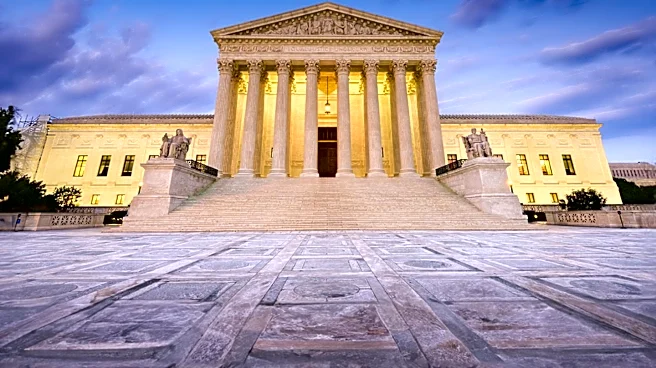
Federal courts are currently split on whether text messages fall under the Telephone Consumer Protection Act's (TCPA) Do-Not-Call provisions, a division that emerged after the U.S. Supreme Court's decision in Loper Bright Enterprises v. Raimondo (2024).
This Supreme Court ruling eliminated judicial deference to agency interpretations, prompting federal courts to re-evaluate the scope of the TCPA. Previously, courts largely relied on Federal Communications Commission (FCC) guidance to include text messages in TCPA lawsuits. However, the Seventh Circuit Court of Appeals, in Steidinger v. Blackstone Medical Services (2026), explicitly ruled that Section 227(c)(5) of the TCPA, which addresses 'telephone calls,' does not cover text messages, interpreting 'telephone call' based on its ordinary meaning in 1991 when the law was enacted. Conversely, the Ninth Circuit, in Howard v. Republican National Committee (2026), held that a text message does qualify as a 'call' under the TCPA, even after Loper Bright. This creates a significant legal divergence, with district courts in states like Illinois, Indiana, and Wisconsin bound by the Seventh Circuit's interpretation, while those in Alaska, Arizona, California, and other western states are bound by the Ninth Circuit's.
Why It's Important?
This circuit split has substantial implications for businesses and consumers across the U.S. For businesses, particularly those engaged in marketing or customer communication via text, the legal landscape for TCPA compliance has become highly fragmented and uncertain. Depending on their geographic location, companies may face differing legal standards regarding unsolicited text messages, affecting their potential liability and defense strategies in TCPA lawsuits. In jurisdictions following the Seventh Circuit, businesses might have a stronger basis for early dismissal of text-based TCPA claims. Conversely, in Ninth Circuit states, the risk of litigation for text message practices remains high. This divergence could lead to forum shopping, where plaintiffs strategically file lawsuits in circuits with more favorable interpretations. The high volume of TCPA class-action litigation and the statutory damages involved mean that this legal uncertainty translates into significant financial risk for companies and varying levels of protection for consumers against unwanted texts.
What's Next?
The disagreement between the Seventh and Ninth Circuits is likely to expand as other appellate courts weigh in on pending appeals and interlocutory certifications. Given the significant stakes and the volume of TCPA class-action lawsuits, it is highly probable that this issue will eventually reach the U.S. Supreme Court for a definitive resolution. Until then, businesses facing TCPA claims related to text messages must carefully review the statutory basis of each claim and the controlling precedent in their specific jurisdiction. Defendants outside the Ninth Circuit may consider filing early motions to dismiss based on the Steidinger decision. In the Ninth Circuit, businesses may need to preserve the argument for potential further appellate review or consider interlocutory appeals if their defense is rejected. Additionally, businesses should assess potential state law claims, as some state regulations, like the Florida Telephone Solicitation Act, explicitly cover text messages and may still apply even if federal TCPA claims are dismissed.
Beyond the Headlines
The evolving interpretation of the TCPA highlights a broader challenge in applying decades-old legislation to modern communication technologies. The Supreme Court's decision to eliminate judicial deference to agency interpretations, while intended to clarify the separation of powers, has inadvertently created immediate legal ambiguities in areas like telecommunications. This situation underscores the need for legislative updates to address technological advancements explicitly, rather than relying on judicial reinterpretation of older statutes. The current circuit split also reveals the inherent tension between protecting consumers from unwanted solicitations and providing businesses with clear, consistent regulatory guidelines. The outcome of this legal debate will not only shape the future of text message marketing but also set precedents for how courts approach statutory interpretation in an era of rapid technological change, potentially influencing other areas where existing laws struggle to keep pace with innovation.