







What's Happening?
Tether, a major player in digital assets, has successfully brought together 15 Bitcoin mining companies, chipmakers, and pool operators to adopt and integrate its open-source Mining Development Kit (MDK). This initiative, announced on October 24 at the Plan
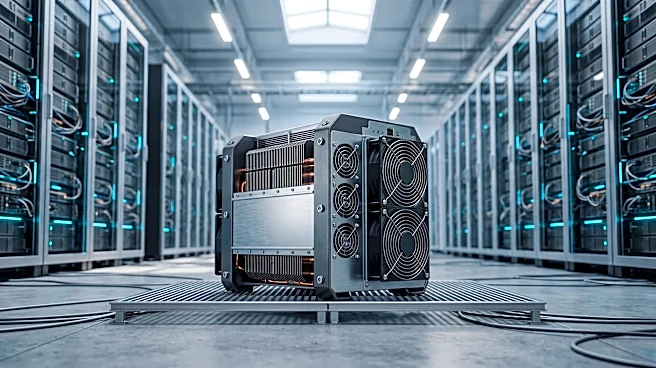
₿ Forum in Lugano, Switzerland, aims to establish a common software standard for operating Bitcoin mining hardware. The MDK is designed to facilitate the use of AI software to directly manage mining equipment, moving beyond mere monitoring. The participating entities include prominent ASIC manufacturers like Bitmain, Canaan, MicroBT, and Bitdeer, as well as various pools, operators, and hardware makers. Tether has released version 0.11 of the kit and is targeting a stable 1.0 release by the end of 2026. The company emphasizes that this arrangement does not necessitate companies to replace existing equipment or relinquish control of their operating systems, allowing participants to choose which functions to expose through the shared interface. The MDK supports Windows, macOS, and Linux, catering to both home rigs and industrial-scale facilities.
Why It's Important?
This development is significant for the U.S. Bitcoin mining industry and the broader digital asset ecosystem. By establishing a common software standard, Tether is addressing a critical challenge in the industry: the disparate operating languages and systems used by various mining hardware manufacturers. This standardization could lead to increased efficiency, reduced operational complexities, and potentially lower maintenance costs for mining operations. The integration of AI software, as envisioned by Tether, could optimize power consumption and output, making Bitcoin mining more sustainable and profitable. For U.S. mining firms, this could mean a more streamlined approach to managing their diverse hardware fleets and a competitive edge through advanced automation. The initiative also highlights Tether's expanding influence beyond stablecoins, positioning it as a key innovator in the Bitcoin mining sector. The ability to run compatible monitoring and automation tools across equipment from multiple vendors without rebuilding software for each manufacturer could be a game-changer for the industry.
What's Next?
Tether is continuing to develop its Mining Development Kit, with a stable 1.0 release targeted before the end of 2026. The immediate next steps involve the participating companies developing and maintaining 'Workers,' which are components that convert data from their specific machines, pools, or services into a format readable by any application built on the MDK. This will enable operators to run compatible monitoring and automation tools across various equipment. The industry will be closely watching for independent results on how much Tether's QVAC mining agent, which already operates on the framework, improves power consumption, output, or maintenance costs. The success of this standardization effort could lead to wider adoption across the Bitcoin mining industry, potentially attracting more firms to join the coalition. Further advancements in AI integration and automation within mining operations are also anticipated as the MDK evolves.
Beyond the Headlines
The move by Tether to standardize Bitcoin mining software and integrate AI has deeper implications for the future of decentralized finance and energy consumption. Ethically, the push for greater efficiency through AI could address concerns about the environmental impact of Bitcoin mining, potentially leading to more sustainable practices. Legally, the establishment of a common standard could influence future regulatory frameworks for digital asset mining, as it creates a more unified and potentially auditable operational environment. Culturally, this initiative signifies a shift towards more sophisticated and automated management of digital infrastructure, reflecting a broader trend of AI integration across various industries. The long-term shift could see Bitcoin mining becoming a highly optimized, AI-driven industry, potentially altering the competitive landscape and the accessibility of mining operations. This could also set a precedent for other blockchain-related industries to adopt similar standardization and AI integration efforts.