






What's Happening?
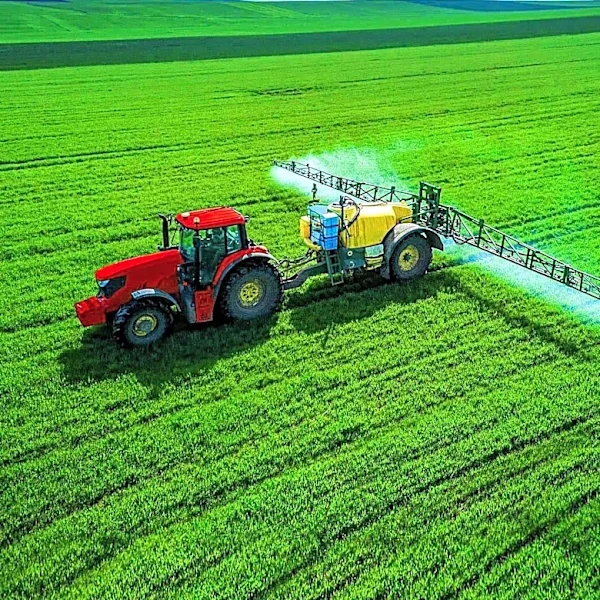
Researchers at the University of Missouri are leveraging artificial intelligence to improve planting decisions for corn farmers. The AI technology allows for variable-rate seeding (VRS), which adjusts seed populations based on specific field conditions
such as soil quality and moisture levels. This approach contrasts with traditional methods that use a uniform seeding rate across entire fields. By tailoring planting strategies to the unique characteristics of different field areas, farmers can optimize yields and reduce input costs. The AI model integrates data on soil characteristics, elevation, and historical crop yields to inform these decisions.
Why It's Important?
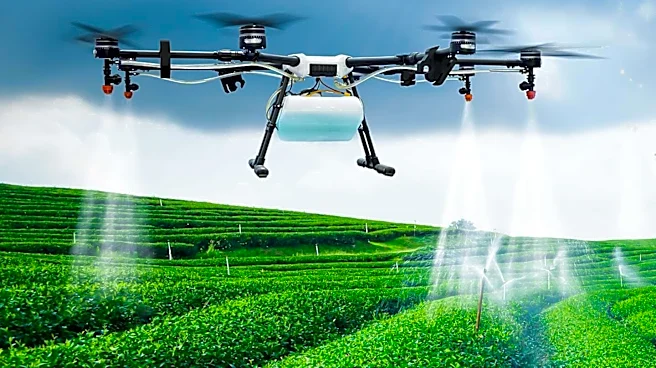
The application of AI in agriculture represents a significant advancement in precision farming. By enabling more accurate planting decisions, AI technology can help farmers increase productivity while minimizing waste. This is particularly important in the context of rising input costs and environmental concerns. The ability to reduce unnecessary applications of fertilizers and crop protection products not only lowers costs but also mitigates environmental impacts such as nutrient runoff. As the agricultural sector faces increasing pressure to produce more food sustainably, AI-driven solutions offer a promising path forward.
What's Next?
The research team plans to continue testing the AI technology at the University of Missouri's Digital Agriculture Research and Extension Center. Future developments may include refining the AI model to improve its predictive accuracy for other crops, such as soybeans, which are more sensitive to weather conditions. As the technology matures, it could be adopted more widely by farmers seeking to enhance their operational efficiency and sustainability. The success of this initiative could also spur further investment in agricultural AI technologies, potentially transforming farming practices on a global scale.