





What's Happening?
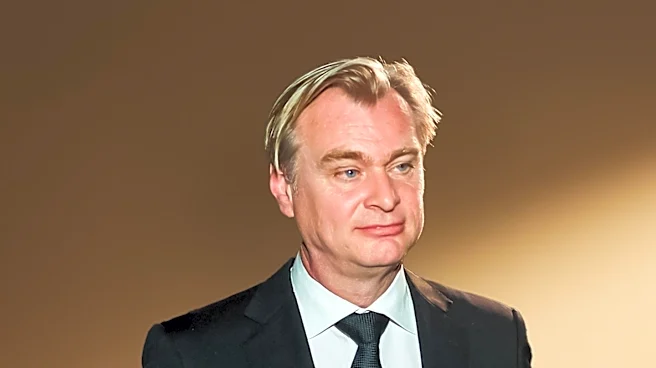
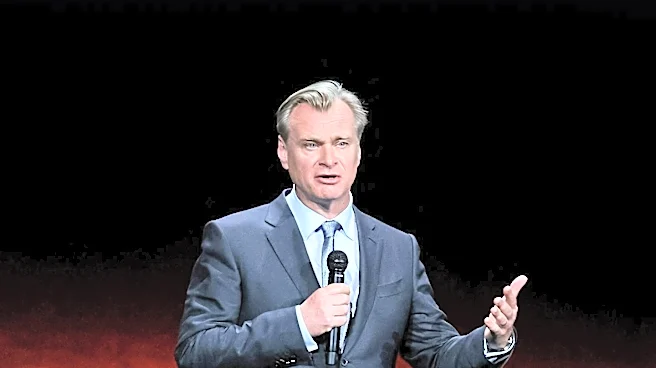
Christopher Nolan, the acclaimed director known for films like 'Oppenheimer' and 'The Dark Knight', has expressed skepticism about the role of artificial intelligence (AI) in creative industries. As he promotes his latest film, 'The Odyssey', Nolan argues
that while AI has been embraced by Wall Street and tech companies, it faces significant rejection from the public, particularly in creative fields such as music, cinema, and art. He refers to the term 'AI slop', coined by young people, to describe the influx of AI-generated content on social media. Nolan believes that AI will not replace human creativity and emphasizes the importance of responsibility in its use. His comments come in the context of ongoing debates about AI's potential to replace roles traditionally held by actors, writers, and camera operators, a concern that contributed to a major Hollywood strike in 2023.
Why It's Important?
Nolan's remarks highlight a critical tension between technological advancement and creative integrity. As AI continues to permeate various sectors, its impact on creative industries raises questions about the future of human creativity and employment. The director's stance underscores a broader societal concern about AI's potential to devalue human contributions in art and entertainment. This debate is particularly relevant in Hollywood, where fears of AI replacing human roles have already led to significant labor disputes. Nolan's perspective adds a prominent voice to the conversation, advocating for a balanced approach that recognizes AI's utility while safeguarding creative expression and employment.
What's Next?
As 'The Odyssey' hits theaters, the film's reception may further influence discussions about AI in filmmaking. Industry stakeholders, including directors, producers, and actors, are likely to continue debating AI's role, potentially leading to new industry standards or regulations. The creative community may also explore ways to integrate AI responsibly, ensuring it complements rather than replaces human creativity. Additionally, public and industry reactions to Nolan's film and comments could shape future narratives around AI's place in the arts.