




What's Happening?
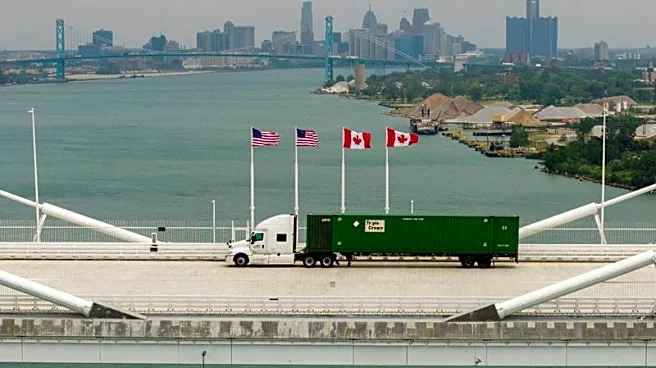
The Trump administration has implemented new 50% tariffs on various Canadian goods, effective Saturday morning, following the collapse of trade negotiations. President Trump initially announced these tariffs last month, citing a need to 'offset Canadian discrimination.'
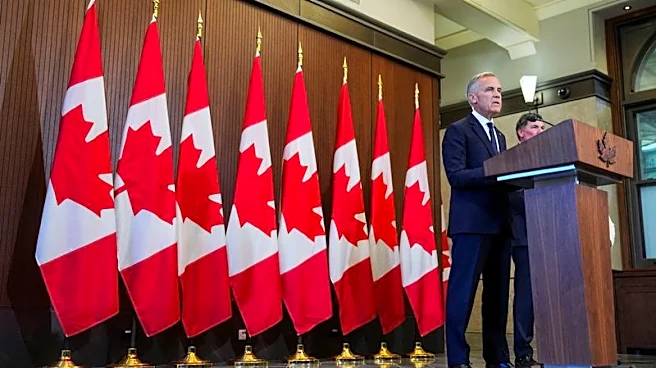
Canadian Prime Minister Mark Carney responded by announcing dollar-for-dollar counter-tariffs on imported U.S. goods, which will impact sectors such as dairy, steel, appliances, agricultural equipment, pulp and paper, and electronics. Carney stated that Canada took this step reluctantly, acknowledging that it would increase costs and reduce consumer choice for Canadians. U.S. and Canadian officials had been engaged in discussions throughout the week to avert the tariffs, with President Trump indicating earlier in the week that a deal was close. However, Prime Minister Carney announced late Friday that he was suspending negotiations due to what he described as 'unfair' last-minute changes proposed by the United States. This latest development marks an escalation in the ongoing trade dispute between the two nations, which began in early 2025 when President Trump first imposed tariffs on Canadian goods, leading to retaliatory measures from Canada.
Why It's Important?
These new tariffs are significant as they represent a substantial escalation in trade tensions between the United States and Canada, two of the world's largest trading partners. The 50% tariff rate is exceptionally high and is expected to have a direct and immediate impact on the cost of a wide range of consumer products, including alcoholic beverages, dairy items, and even hockey equipment. For U.S. consumers, this means higher prices for popular Canadian imports, potentially reducing their purchasing power and choice. For U.S. businesses that rely on Canadian components or products, these tariffs could disrupt supply chains and increase operational costs, which may be passed on to consumers or result in reduced profitability. Conversely, Canadian industries targeted by U.S. counter-tariffs will face similar challenges in the U.S. market. The tit-for-tat nature of these tariffs risks a broader trade war, which could negatively affect economic growth and stability in both countries. The breakdown of negotiations also signals a deterioration in diplomatic relations, potentially impacting future cooperation on other bilateral issues.
What's Next?
The immediate consequence will be the increased cost of Canadian goods for U.S. consumers and U.S. goods for Canadian consumers, as the tariffs have already taken effect. Businesses in both countries will need to adjust their pricing strategies and supply chains to account for these new costs. It is likely that consumers will see price hikes on affected products in the coming weeks. The breakdown of trade talks suggests that a resolution is not imminent, and further retaliatory measures from either side remain a possibility. Political leaders in both the U.S. and Canada will face pressure from affected industries and consumers to address the economic fallout. The situation could also prompt other trading partners to reassess their own trade relationships with the U.S., potentially leading to a more protectionist global trade environment. Future negotiations, if they occur, will likely be more challenging given the current impasse and the stated positions of both governments.
Beyond the Headlines
Beyond the immediate economic impact, these tariffs highlight a fundamental shift in the U.S.'s approach to international trade, moving away from traditional alliances towards a more confrontational stance. The use of tariffs as a primary tool for addressing perceived trade imbalances or 'discrimination' could set a precedent for future disputes with other nations. This strategy challenges the established norms of global trade and could undermine multilateral trade agreements. The breakdown of talks with Canada, a historically close ally, also raises questions about the long-term stability of international trade relationships and the potential for increased economic nationalism. The impact on specific industries, such as the dairy sector, could lead to significant restructuring and job losses, affecting local economies. Furthermore, the political rhetoric surrounding these trade disputes could fuel anti-trade sentiments and influence future electoral outcomes in both countries, shaping their respective economic policies for years to come.