








What's Happening?
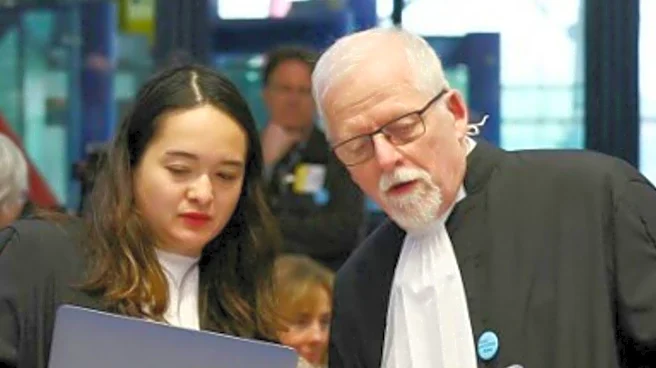
Verónica Echegui is starring in the film 'Justicia Artificial' (Artificial Justice), a political thriller directed by Simón Casal. The movie, which also features Alberto Ammann and Tamar Novas, delves into the complex issue of artificial intelligence
replacing human judges in the judicial system. Set in Spain, the narrative explores a scenario where the public is preparing to vote on a referendum for implementing such an AI system. While initially presented as a tool to streamline and depoliticize justice, the film quickly uncovers a web of political, technological, and economic interests. 'Justicia Artificial' has been showcased at international festivals, including Shanghai and San Sebastián, prompting discussions on the ethical boundaries of technology, judicial independence, and the implications of delegating fundamental decisions to automated systems. The film is part of the VI Cinema and Law Cycle, organized by the Official Bar and Solicitors' Associations of Huesca, which aims to use cinema as a didactic resource to foster a deeper understanding of legal culture.
Why It's Important?
The film 'Justicia Artificial' is important because it addresses a critical and evolving debate surrounding the integration of artificial intelligence into societal institutions, particularly the judiciary. The potential for AI to replace human judges raises profound questions about fairness, accountability, and the very nature of justice. In the U.S., discussions around AI in legal processes are gaining traction, with some advocating for its use to improve efficiency and reduce bias, while others express concerns about algorithmic transparency, data privacy, and the potential for AI to perpetuate or even amplify existing societal inequalities. The film's exploration of political, technological, and economic interests behind such a system highlights the complex interplay of power dynamics that could influence the adoption and regulation of AI in legal frameworks. This cinematic narrative serves as a cautionary tale and a catalyst for public discourse on how to balance technological advancement with fundamental human rights and democratic principles, impacting future policy decisions and public perception of AI's role in governance.
What's Next?
The film 'Justicia Artificial' is being screened as part of the VI Cinema and Law Cycle, which includes a colloquium with Eurodeputy Rosa Serrano. This discussion will further explore the legal, political, and social challenges posed by the increasing incorporation of artificial intelligence into institutions. The event aims to deepen the understanding of these issues among legal professionals and the public. Following the film's screening, the dialogue with Serrano will likely focus on European regulations concerning artificial intelligence, providing insights into potential legislative frameworks and ethical guidelines that could influence global approaches to AI in justice. The ongoing public and professional discussions sparked by the film and its associated events are expected to contribute to the broader conversation about the future of AI in legal systems, potentially shaping future policy recommendations and public engagement on this critical topic. The cycle's emphasis on using cinema as a didactic tool suggests a continued effort to educate and engage stakeholders on the evolving landscape of law and technology.
Beyond the Headlines
Beyond the immediate narrative of 'Justicia Artificial,' the film touches upon deeper ethical and societal implications of artificial intelligence. The concept of an AI system replacing judges raises fundamental questions about human agency, moral responsibility, and the intrinsic value of human judgment in matters of law and justice. If AI can make judicial decisions, what does this mean for the concept of empathy, discretion, and the nuanced interpretation of complex human situations that are often central to legal proceedings? The film's exploration of political, technological, and economic interests behind such a system suggests that the drive for AI integration might not always be purely for efficiency or impartiality, but could be influenced by powerful stakeholders seeking control or profit. This highlights the critical need for robust ethical frameworks and transparent governance mechanisms to ensure that AI serves humanity rather than being exploited for narrow interests. The debate extends to the potential for AI to create a two-tiered justice system, where access to human judgment might become a privilege, further exacerbating social inequalities.