





What's Happening?
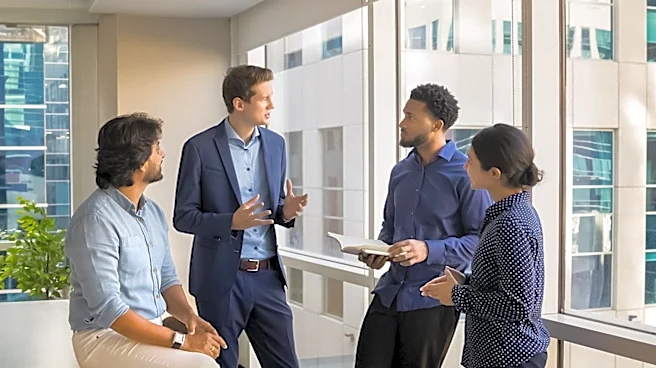
Gen Z is actively redefining corporate culture by advocating for flexible and evolving workplace norms that prioritize individual autonomy and overall well-being. This generation is moving away from the traditional understanding of a 'good employee' that often
implied unquestioning acceptance of all work conditions. Instead, they are pushing for fairer compensation, reasonable working hours, and clearly defined responsibilities. Gen Z also challenges conventional management styles, expecting explicit communication and transparency from their leaders. They are questioning the 'hustle culture' mentality, which equates constant busyness with productivity, and are instead valuing meaningful work and a balanced life. This shift is evident in the emergence of new workplace terms like 'quiet quitting,' 'bare minimum Monday,' 'boreout,' 'coffee badging,' 'snail girl,' 'task masking,' and 'acting your wage,' which reflect their desire for boundaries and sustainable productivity. These terms, while sometimes perceived as humorous or slang, signify a deeper conversation around burnout, work-life balance, and evolving workplace expectations.
Why It's Important?
This cultural shift led by Gen Z holds significant implications for U.S. industries and the broader economy. Companies that fail to adapt to these evolving expectations risk losing top talent and experiencing decreased employee morale and productivity. The emphasis on well-being and work-life balance could lead to more human-centric and resilient corporate cultures, potentially reducing burnout rates and fostering a more engaged workforce. However, there's also a perception that Gen Z struggles in the workplace, which may stem from outdated management practices rather than inherent generational flaws. For businesses, understanding and integrating these new norms is crucial for attracting and retaining the next generation of employees. The demand for transparency in job roles, compensation, and growth opportunities, as well as the preference for peer recommendations over traditional employer branding, will necessitate a re-evaluation of recruitment and retention strategies. This generational shift could ultimately drive a broader transformation in how work is structured and valued across various sectors.
What's Next?
In response to Gen Z's influence, companies are likely to continue re-evaluating their workplace policies and management approaches. This could involve implementing more flexible work arrangements, such as hybrid models, and focusing on output and impact rather than mere physical presence or perceived busyness. Employers may need to enhance transparency in job descriptions, clearly outlining expectations, compensation, and growth paths to attract and retain Gen Z talent. The rise of referral systems, incentivizing current employees to recommend candidates, is also expected to grow as Gen Z trusts peer recommendations more than traditional employer branding. Furthermore, there will be a continued need for intergenerational dialogue and understanding within organizations. Older generations may need to adjust their communication styles and expectations, moving away from phrases that Gen Z finds outdated or rude, such as 'per my last email' or 'let's circle back to that.' The ongoing evolution of workplace dynamics will require continuous adaptation from both employees and employers to foster a productive and inclusive environment.
Beyond the Headlines
The cultural shifts driven by Gen Z extend beyond mere workplace preferences, touching upon deeper ethical, social, and psychological dimensions. This generation's questioning of authority, emphasis on individual autonomy, and awareness of institutional prejudice reflect a broader societal evolution towards 'earned legitimacy' rather than automatic deference based on age or position. Their approach to work-life balance and rejection of 'hustle culture' can be seen as a re-evaluation of societal values, moving away from a sole focus on career advancement towards a more holistic view of life. The personalized reality shaped by algorithmic feeds, which Gen Z has grown up with, also influences their perceptions and expectations, sometimes leading to a belief that 'everyone thinks like this.' This highlights a need for developing critical thinking skills to encounter disconfirming information and foster broader perspectives. Ultimately, Gen Z's impact could lead to a more self-governed morality in the workplace, where individuals are expected to integrate freedom with responsibility, critical thought, humility, and reciprocity, moving beyond externally imposed rules to an internally driven ethical framework.