



What's Happening?
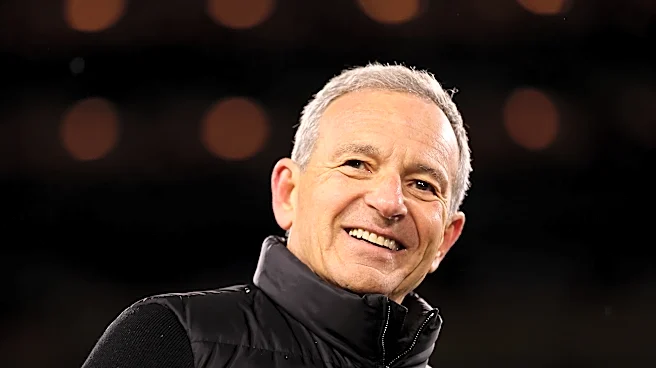
A new book, 'The House of Mouse: Bob Iger and the War of Succession at Disney,' by Wall Street Journal reporter Robbie Whelan, reveals that Disney CEO Bob Iger rejected George Lucas's original story treatments for the 'Star Wars' sequel trilogy. According
to the book, Iger reviewed Lucas's outlines for Episodes VII, VIII, and IX during the acquisition talks for Lucasfilm and ensured that Disney was not legally obligated to produce them. Whelan confirmed on Puck’s The Town podcast that Iger privately dismissed Lucas's treatments, with one individual involved in negotiations recalling Iger stating, 'We are not making these movies.' Lucas's abandoned trilogy reportedly focused on Luke Skywalker, Han Solo, and Princess Leia confronting Darth Maul and his Sith apprentice Darth Talon, delving into concepts like midi-chlorians and the Whills. This contrasts with the Disney-produced trilogy, which began with J.J. Abrams’s 'The Force Awakens.'
Why It's Important?
This revelation is significant for 'Star Wars' fans and the entertainment industry, shedding light on the creative direction of one of the most valuable franchises. The decision to discard George Lucas's original vision, despite acquiring his story treatments as part of the $4 billion Lucasfilm deal, highlights the strategic and creative control Disney exerted over the franchise's future. It underscores the tension that can arise between a creator's original intent and a new owner's commercial and artistic objectives. The subsequent 'Star Wars' sequel trilogy, which began with J.J. Abrams's 'The Force Awakens,' took a different narrative path, leading to ongoing debates among fans about the direction of the saga. This decision by Iger shaped the narrative trajectory of a multi-billion dollar franchise, impacting its cultural legacy and future revenue streams.
What's Next?
While the events described are historical, the ongoing discussion among 'Star Wars' fans about the sequel trilogy's direction is likely to intensify with these new details. The book's insights could fuel further speculation about what Lucas's original vision would have entailed and how it might have been received. For Disney, this information reinforces the company's past strategic decisions regarding the 'Star Wars' franchise, which has continued to expand with new films, series, and theme park attractions. The revelation may also influence how future acquisitions and creative control are perceived within the entertainment industry, particularly concerning established intellectual properties and their original creators.
Beyond the Headlines
The rejection of George Lucas's 'Star Wars' sequel treatments by Disney CEO Bob Iger raises broader questions about creative ownership and corporate stewardship of beloved franchises. It highlights the delicate balance between preserving a creator's original vision and adapting it for new audiences and commercial strategies. This situation exemplifies how corporate acquisitions can lead to fundamental shifts in artistic direction, potentially alienating segments of a dedicated fanbase while aiming for broader appeal. The ongoing debate among 'Star Wars' enthusiasts about the sequel trilogy's quality and narrative choices is deeply rooted in this foundational decision, illustrating the long-term impact of executive choices on cultural phenomena and the enduring legacy of iconic storytelling.