




What's Happening?
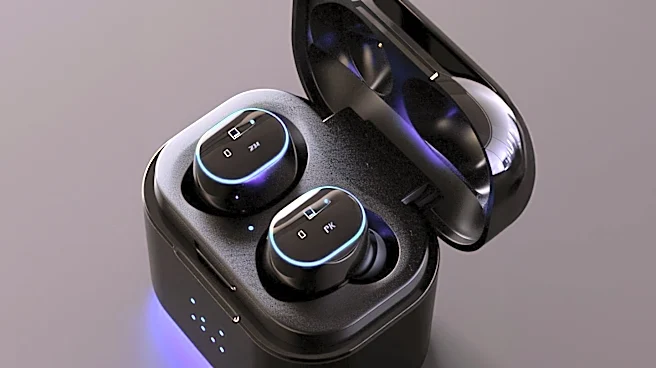
The soundcore Sleep A30 and Fitnexa SomniPods 3 are two sleep earbuds designed for side sleepers, offering active noise cancellation (ANC) and sleep tracking. The soundcore Sleep A30 features a unique case-based snore masking system, where a microphone
in the charging case detects snoring and the earbuds play adjusted masking audio. It tracks sleep duration, position, and snoring. The SomniPods 3, on the other hand, emphasizes high-quality daytime audio with LDAC and aptX Lossless support for Android phones, wireless charging, and tracks awake, light, and deep sleep, as well as position. Both earbuds are lightweight and offer various ear tip and wing sizes for comfort. The Sleep A30 is priced at $199.99, while the SomniPods 3 is on sale for $159.99 (list $189.99).
Why It's Important?
This comparison is important for U.S. consumers seeking specialized solutions for sleep disturbances, particularly those caused by snoring or ambient noise. The soundcore Sleep A30's innovative snore masking technology addresses a common issue that affects many households, potentially improving sleep quality for both the snorer's partner and the snorer themselves. The SomniPods 3's focus on high-fidelity audio and wireless charging caters to users who desire a single earbud solution for both sleep and daily listening, offering convenience and versatility. The availability of such specialized devices highlights a growing market for personalized sleep technology, moving beyond general fitness trackers to targeted solutions for specific sleep challenges. This trend can lead to improved public health outcomes by addressing chronic sleep deprivation.
What's Next?
The market for sleep-specific earbuds is likely to expand, with manufacturers focusing on refining noise cancellation, comfort, and integrated health tracking features. Future iterations may see more advanced AI-driven sound masking, personalized sleep soundscapes, and deeper integration with smart home systems. The competition between devices that prioritize sleep over daytime use and those that offer a hybrid approach will continue to evolve. Companies may also explore partnerships with sleep clinics or healthcare providers to validate the effectiveness of their technologies. As consumer awareness of sleep health grows, demand for these specialized devices is expected to increase, driving further innovation in battery life, material science for comfort, and data privacy measures.
Beyond the Headlines
The development of sleep earbuds like these reflects a broader societal recognition of the importance of sleep quality for overall well-being. Beyond just noise reduction, these devices are becoming tools for personalized sleep hygiene, offering insights and interventions tailored to individual needs. The integration of advanced audio codecs in SomniPods 3 also points to a convergence of wellness and entertainment technology, where devices serve multiple functions throughout the day and night. However, reliance on such technology also raises questions about potential over-dependence and the need for users to maintain natural sleep habits. The ethical implications of continuous biometric data collection, even for wellness purposes, will also remain a pertinent discussion point, particularly regarding data security and user consent.