


What's Happening?
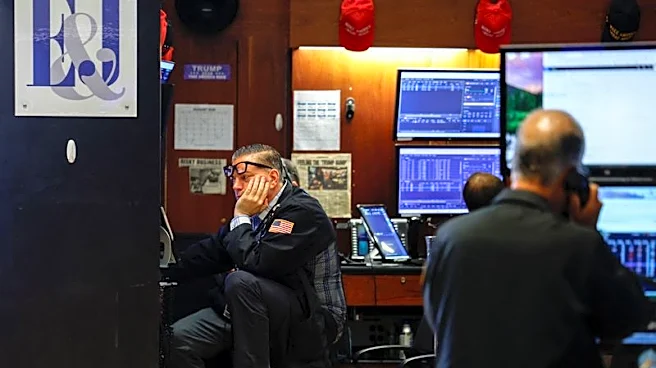
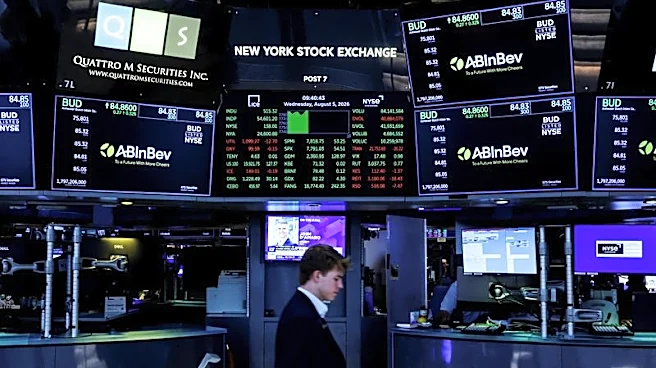
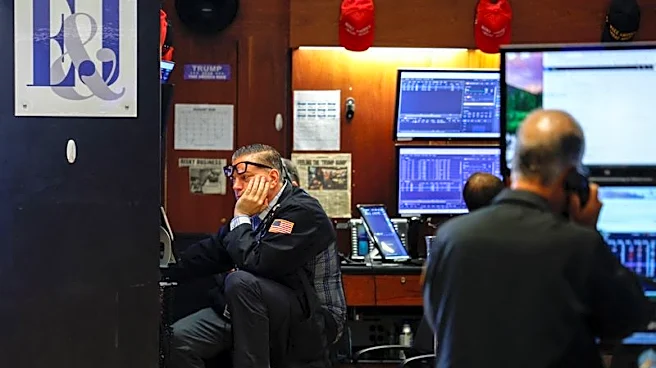
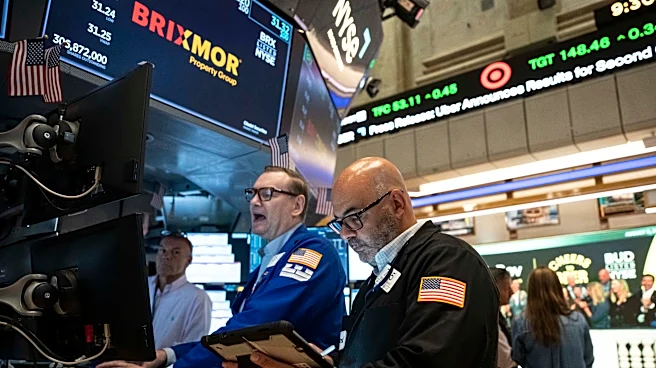
U.S. and Canadian stocks experienced a downturn on Thursday following a strong start to the week. This decline comes as investors processed recent corporate earnings and monitored developments in potential peace talks between the U.S. and Iran. Earlier
in the week, optimism over a possible end to hostilities in Iran and a robust earnings season had driven the Dow Industrials, S&P 500, and TSX to record highs. However, on Thursday, oil prices rose, with U.S. crude settling at $77.29 per barrel, and Brent at $82.49 per barrel. The Iranian parliamentary committee is reviewing a bill that could restrict U.S. and Israeli vessels from the Strait of Hormuz. The Dow Jones Industrial Average fell by 464.02 points, the S&P 500 lost 13.52 points, and the Nasdaq Composite dropped by 15.09 points. The technology sector saw a decline, with companies like Celestica and ATS Corporation experiencing significant losses.
Why It's Important?
The fluctuations in the stock market reflect investor sentiment regarding geopolitical developments and corporate performance. The potential peace deal between the U.S. and Iran could have significant implications for global oil prices and inflation, influencing Federal Reserve policy on interest rates. The market's reaction to corporate earnings, particularly in the tech sector, highlights the ongoing impact of AI investments and the challenges companies face in meeting investor expectations. The outcome of the Middle East talks could stabilize or further disrupt market conditions, affecting economic stakeholders and policy decisions.
What's Next?
Investors will continue to watch for updates on the U.S.-Iran peace talks and their potential impact on oil prices and inflation. The Federal Reserve's response to these developments, particularly regarding interest rates, will be closely monitored. Additionally, upcoming corporate earnings reports will provide further insights into the health of the tech sector and broader market trends. Stakeholders will need to navigate these uncertainties as they assess investment strategies and economic forecasts.