







What's Happening?
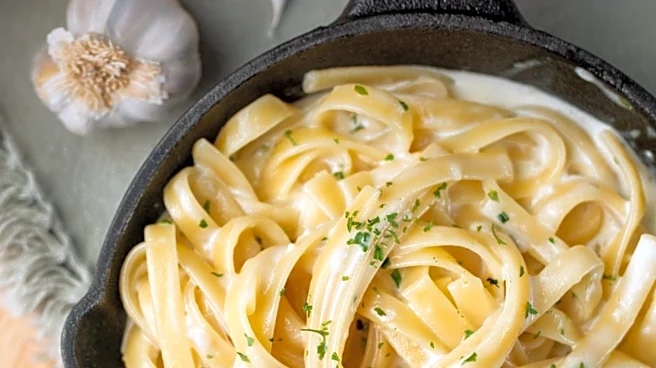
Celebrity chef Giada De Laurentiis has shared a crucial pasta-cooking technique with fellow Food Network star Bobby Flay, which Flay has since adopted in his professional cooking. The technique involves sprinkling finely grated cheese, specifically Parmigiano
Reggiano, over al dente pasta before it is transferred to the sauce. This method creates a strong bond between the cheese and the pasta, enabling the pasta to absorb the sauce more effectively. While various finely-grated cheeses can be used, Parmigiano Reggiano or its American counterpart, Parmesan, are considered ideal due to their texture and flavor. Flay reportedly values Parmigiano Reggiano, describing it as 'nutty salt' that enhances any dish. It is advised to add the cheese gradually to prevent clumping and ensure a smooth consistency. This tip highlights how even experienced chefs continue to learn and refine their culinary skills from peers.
Why It's Important?
This culinary insight from Giada De Laurentiis to Bobby Flay is significant for both professional chefs and home cooks, as it offers a practical method to improve pasta dishes. The technique enhances the texture and flavor integration of pasta with its sauce, a common challenge in Italian cooking. By ensuring the cheese acts as a binding agent, it allows the pasta to better absorb the sauce, leading to a more cohesive and flavorful dish. This tip can elevate the quality of pasta preparations in restaurants and home kitchens across the U.S., potentially influencing how pasta is prepared and enjoyed. For consumers, understanding this technique can lead to more satisfying dining experiences, whether they are cooking at home or dining out at establishments that adopt such refined methods. It underscores the continuous evolution of culinary practices and the value of shared knowledge within the food industry.
What's Next?
The adoption of this pasta technique by a prominent chef like Bobby Flay could lead to its wider dissemination and integration into mainstream cooking practices. Other chefs and culinary schools might incorporate this method into their teachings, further solidifying its presence in professional kitchens. Home cooks, inspired by celebrity chefs, may also begin experimenting with this technique, leading to an improvement in the quality of homemade pasta dishes. Food media, including cooking shows and online culinary platforms, may feature this tip, educating a broader audience on its benefits. This could result in a subtle but widespread shift in how pasta is prepared, with a greater emphasis on achieving optimal sauce absorption and flavor integration. The technique's simplicity and effectiveness make it easily adoptable, suggesting a potential for lasting impact on pasta preparation standards.
Beyond the Headlines
Beyond the immediate culinary application, this story highlights the collaborative and ever-evolving nature of the culinary world, even among top-tier professionals. It demonstrates that expertise is not static and that continuous learning and sharing of knowledge are vital for innovation and improvement in any field. The specific technique also underscores the scientific principles behind cooking, where the interaction of ingredients (cheese, pasta, sauce) is crucial for the final outcome. Ethically, it promotes a culture of openness and mutual respect among chefs, where sharing valuable insights is encouraged rather than guarded. Culturally, it reinforces the importance of traditional Italian cooking methods, as Parmigiano Reggiano is a staple in Italian cuisine, and its proper application can significantly impact the authenticity and quality of dishes. This exchange of knowledge contributes to the overall elevation of culinary standards and appreciation for food craftsmanship.