
What's Happening?
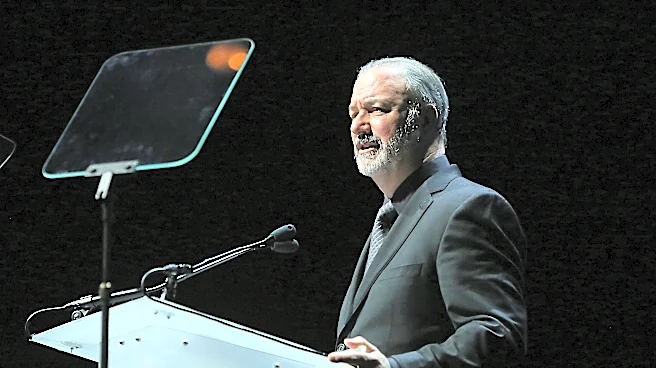
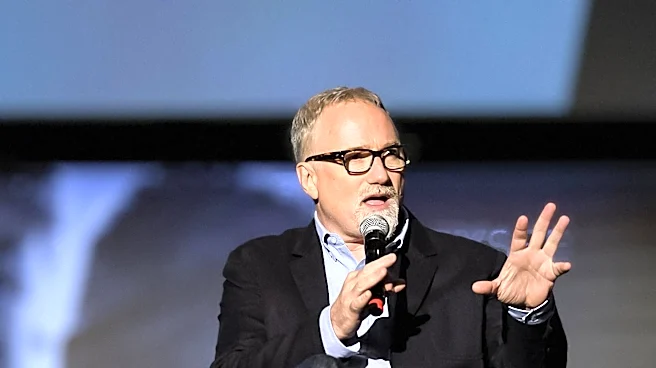
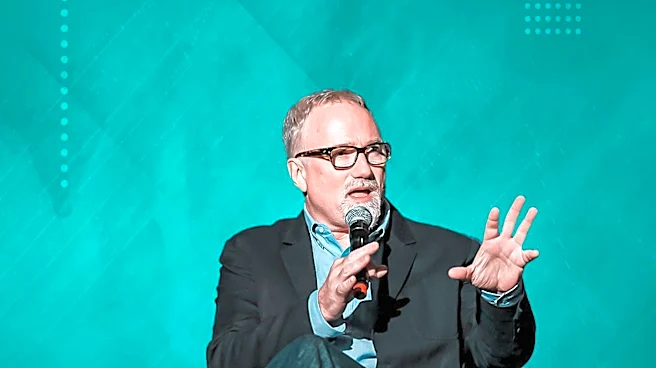
Director David Fincher has drawn criticism for his extensive use of AI in the post-production of his new film, 'The Further Mis-Adventures of Cliff Booth,' and for his vision of future AI-powered filmmaking. In an interview on The Ringer’s 'Big Picture'
podcast, Fincher revealed that AI was used to synchronize line readings with performance takes, replace dialogue, and adjust actors' lip movements in post-production to reduce the number of takes needed. He stated that only 5% of dialogue replacement was done conventionally, with the rest being AI-driven. Fincher also described a future where AI could handle many technical aspects of filmmaking, such as focus, dolly shots, and minor visual corrections, allowing actors to perform scenes fewer times. This approach, which he described as 'entirely plastically' working with material, has been labeled 'wildly dystopian' and 'depressing' by critics and social media users.
Why It's Important?
This development is significant for the U.S. entertainment industry as it highlights the growing tension between technological advancement and traditional creative processes. Fincher's use of AI for performance manipulation raises questions about the authenticity of acting and the definition of a 'performance' in an AI-augmented production. The backlash reflects a broader concern within Hollywood regarding AI's impact on jobs, artistic integrity, and the human element of filmmaking. As AI tools become more sophisticated, the industry faces a critical juncture in balancing cost-cutting and productivity gains with the preservation of human artistry and the potential for 'AI slop,' as described by writer Tony Gilroy. The debate also touches on the ethical implications of altering an actor's performance without their direct, real-time input, potentially leading to a re-evaluation of contracts and creative control.
What's Next?
The controversy surrounding Fincher's AI use is likely to intensify discussions within the entertainment industry about the regulation and ethical guidelines for AI in film production. This could lead to increased pressure from unions and guilds, such as SAG-AFTRA and the WGA, to establish clear boundaries and protections for actors and writers against AI exploitation. Future film projects may face greater scrutiny regarding their use of AI, potentially influencing audience reception and critical acclaim. The debate may also prompt filmmakers and studios to more transparently disclose their AI methodologies. As 'The Further Mis-Adventures of Cliff Booth' becomes available on Netflix, its reception could serve as a case study for how audiences react to AI-enhanced performances, potentially shaping future production decisions across Hollywood.
Beyond the Headlines
Beyond the immediate production concerns, Fincher's vision touches upon profound philosophical questions about art and authenticity. If AI can seamlessly blend and manipulate performances, what constitutes an actor's original contribution? This blurs the lines between human creativity and algorithmic generation, potentially devaluing the unique, imperfect, and often spontaneous elements that define human performance. The ethical implications extend to intellectual property and the potential for AI to create 'synthetic' performances based on existing actors without their full consent or fair compensation. This shift could fundamentally alter the power dynamics within the industry, favoring studios and directors who can leverage AI to achieve their precise visions, potentially at the expense of the collaborative and human-centric nature of filmmaking. The long-term impact could be a redefinition of what it means to be a 'filmmaker' or 'actor' in an increasingly AI-driven creative landscape.