


What's Happening?
Fans of the 'Fast & Furious' film series can experience elements of the movies in Tokyo, despite the absence of official film sets. Key locations like the Shibuya scramble crossing and the neon-lit streets of Shinjuku, which served as backdrops in 'Tokyo
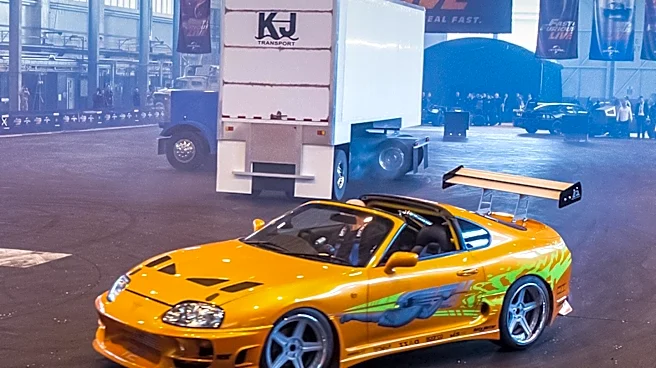
Drift,' are accessible for walking tours. Additionally, enthusiasts can witness Japan's car culture at Daikoku PA, a public parking area near Yokohama known for car meets. For a more immersive experience, companies offer opportunities to drive or ride in 'Fast & Furious'-era Japanese Domestic Market (JDM) cars through central Tokyo. Legal drifting experiences are also available on closed courses, as public road drifting is illegal in Japan. The driving scenes in the films were largely shot in the Los Angeles area, with parts of Shibuya Crossing reportedly recreated there.
Why It's Important?
This development highlights the enduring global cultural impact of popular film franchises and the creative ways local tourism and automotive enthusiasts capitalize on this interest. For U.S. fans of the 'Fast & Furious' series, it provides a tangible connection to the cinematic world, offering unique travel and recreational opportunities. It also showcases the distinct car culture prevalent in Japan, which has significantly influenced automotive trends and modifications worldwide, including in the U.S. The availability of legal drifting experiences on closed courses underscores a responsible approach to enjoying high-performance driving, contrasting with the illegal street racing often depicted in fiction. This blend of cinematic tourism and authentic cultural immersion can boost local economies through specialized tours and car-related services.
What's Next?
As interest in film-inspired tourism continues, it is likely that more specialized tours and experiences will emerge in Tokyo, catering to fans seeking to recreate movie moments. Tour operators may expand their fleet of JDM cars or develop new routes that align with other iconic scenes from the 'Fast & Furious' franchise. There could also be an increase in demand for professional drift ride-alongs, potentially leading to more dedicated closed-course facilities or events. The ongoing popularity of Japanese car culture, fueled by media and international interest, suggests a sustained market for these types of experiences. Additionally, as technology advances, virtual reality or augmented reality experiences might be integrated into these tours, offering even more immersive ways for fans to engage with the film's settings and themes.
Beyond the Headlines
Beyond the immediate appeal to 'Fast & Furious' fans, these experiences tap into a broader fascination with Japanese urban landscapes and automotive engineering. The ability to walk through Shibuya and Shinjuku, or witness the car culture at Daikoku PA, offers a glimpse into the daily life and subcultures of Tokyo that extend beyond the cinematic portrayal. It also raises questions about the interplay between fictional narratives and real-world tourism, where film locations become destinations in their own right. The emphasis on legal and safe driving experiences, such as closed-course drifting, subtly promotes responsible automotive enthusiasm, contrasting with the often-glamorized illegal activities in films. This trend reflects a growing desire among travelers for authentic, niche experiences that connect them with their passions, whether it's film, cars, or urban exploration.