



What's Happening?
A screenwriter's explanation of how staircases are intentionally used in films to visually represent power dynamics has gone viral. According to the screenwriter, a person positioned higher on a staircase in a scene is typically in command, giving orders
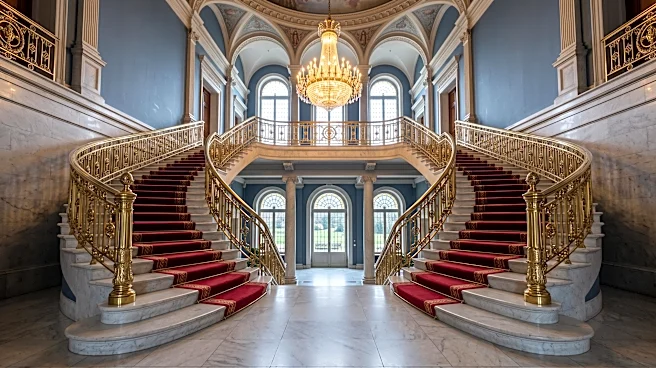
or taking control, while those lower on the steps are listening or responding. This cinematic technique is consistently applied to convey who holds authority in a given moment. He illustrated this concept using a scene from 'The Princess Diaries 2,' where characters' positions on a double staircase shift to reflect their changing power struggle during a conversation. The video, which garnered over 2.5 million views, has resonated with viewers who appreciate the insight into filmmaking techniques.
Why It's Important?
This insight into cinematic storytelling is important because it reveals a subtle yet powerful tool filmmakers use to communicate narrative and character relationships without explicit dialogue. Understanding such visual cues enhances the audience's appreciation and critical analysis of films, moving beyond surface-level viewing to a deeper understanding of artistic intent. For aspiring filmmakers and film students, this explanation provides a practical example of how set design and blocking contribute significantly to character development and plot progression. It highlights the meticulous planning involved in moviemaking, where every element, including architectural features like staircases, can serve a specific narrative purpose, influencing audience perception of power and control.
What's Next?
The viral nature of this explanation suggests a growing public interest in the 'behind-the-scenes' aspects of filmmaking and media literacy. This trend could lead to more content creators and educators sharing similar analyses of cinematic techniques, fostering a more informed and engaged audience. Film critics and academics might also incorporate such accessible explanations into their discussions, bridging the gap between expert analysis and general audience understanding. Furthermore, this increased awareness could influence how future films are received, with audiences potentially becoming more attuned to these visual cues and discussing their effectiveness. The popularity of such content indicates a demand for deeper insights into the art and craft of storytelling.
Beyond the Headlines
Beyond its immediate application in film analysis, the concept of using physical elevation to denote power dynamics has broader cultural and psychological implications. This visual metaphor is deeply rooted in human perception, where 'looking down' on someone or 'rising above' a situation inherently suggests superiority or control. This principle extends beyond cinema into architecture, social hierarchies, and even language, where phrases like 'high-ranking' or 'lowly' reflect similar ideas. The screenwriter's explanation taps into a universal understanding of status and authority, demonstrating how art often mirrors and reinforces fundamental human experiences. It encourages a more critical examination of how visual elements in various forms of media subtly shape our understanding of power structures.