







What's Happening?
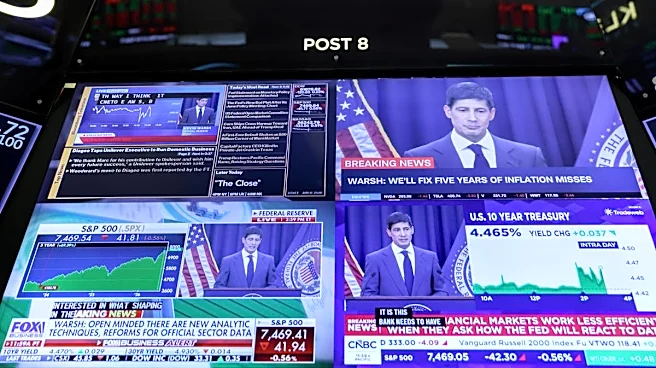
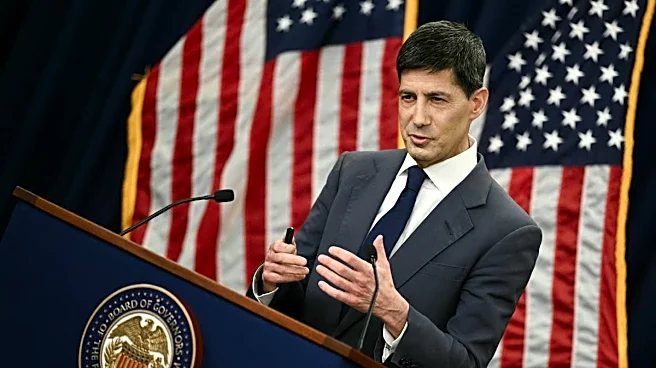
Gold prices have experienced a significant decline following Federal Reserve Chairman Kevin Warsh's first press conference, where he emphasized the central bank's commitment to restoring price stability. Market reactions were swift, with many investors
interpreting Warsh's statements as indicative of a hawkish monetary policy stance. However, Rebecca Ivaldi, a Market Strategist at FCT Capital Partners and former Lehman Brothers analyst, argues that the market may be overestimating the Fed's willingness to maintain restrictive policies. Ivaldi points out that Warsh's comments on housing markets and his skepticism towards traditional inflation measures suggest a potentially less restrictive policy path. Additionally, Warsh's announcement of a task force to improve economic data collection indicates a nuanced approach to inflation assessment. Despite the immediate market reaction, Ivaldi believes that geopolitical developments and non-dollar trade arrangements will continue to support long-term demand for gold.
Why It's Important?
The Federal Reserve's policy direction significantly impacts global financial markets, influencing investor behavior and economic stability. The recent selloff in gold highlights the sensitivity of markets to perceived changes in monetary policy. However, Ivaldi's analysis suggests that underlying structural factors, such as geopolitical tensions and evolving trade dynamics, may sustain gold demand irrespective of short-term interest rate expectations. This perspective is crucial for investors seeking to navigate the complexities of global capital flows and the interplay between monetary policy and commodity markets. The Fed's approach to data collection and inflation measurement could also reshape market expectations and policy decisions, affecting a wide range of economic stakeholders.
What's Next?
As the Federal Reserve continues to assess economic conditions, future policy decisions will likely hinge on incoming data and the evolving global economic landscape. Investors and policymakers will closely monitor the Fed's task force on data collection and its implications for inflation assessment. Additionally, geopolitical developments and trade dynamics will remain critical factors influencing gold demand and broader market trends. The Fed's ability to balance price stability with economic growth will be a key focus for market participants, with potential adjustments to interest rates and monetary policy shaping future economic outcomes.