






What's Happening?
The International Brotherhood of Teamsters has consolidated its former Freight, Express, and Carhaul divisions into a new Logistics Division. This unified division now represents tens of thousands of Teamsters across North America, encompassing truck
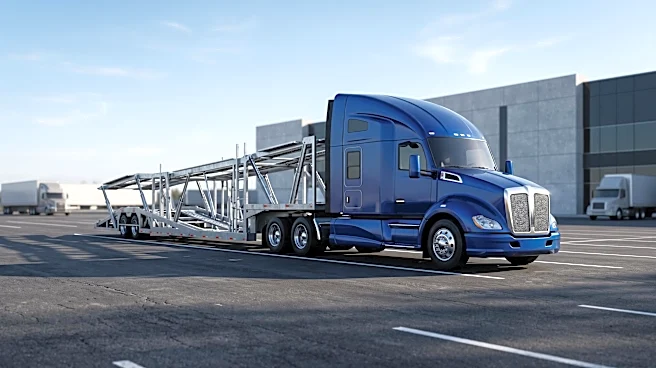
drivers, dockworkers, office personnel, and vehicle transporters. These workers are employed by major companies such as DHL Express, as well as other significant freight and carhaul enterprises. The Logistics Division is responsible for coordinating various critical functions, including organizing new members, managing grievance panels, overseeing changes of operations, and enforcing contracts. A key aspect of its role involves negotiating major national contracts, such as the National Master Freight Agreement, the National Master DHL Express Agreement, and the National Master Automobile Transporters Agreement, which are crucial for setting industry standards and protecting workers' rights.
Why It's Important?
The formation of the Logistics Division by the International Brotherhood of Teamsters is a significant development for the U.S. labor landscape and the broader supply chain. By unifying the freight, express, and carhaul sectors, the Teamsters aim to create a more cohesive and powerful bargaining unit. This consolidation can enhance their ability to negotiate stronger national contracts, potentially leading to improved wages, benefits, and working conditions for tens of thousands of workers. A unified approach allows for better coordination in organizing efforts and contract enforcement, which can strengthen the union's influence across the logistics industry. This move is particularly important given the critical role these sectors play in the national economy, ensuring the movement of goods, packages, and vehicles. Stronger union representation can help stabilize the workforce, address labor disputes more effectively, and contribute to a more equitable distribution of profits within the logistics industry, ultimately impacting consumer costs and supply chain reliability.
What's Next?
The newly formed Logistics Division is expected to intensify its efforts in organizing new members and negotiating national contracts. The unification could lead to more streamlined and impactful negotiations for future agreements, potentially setting new benchmarks for compensation and working conditions in the freight, express, and carhaul sectors. Employers in these industries will likely face a more unified and formidable bargaining partner, which could influence their labor strategies and operational costs. The division's focus on grievance panels and contract enforcement suggests a proactive approach to protecting workers' rights, which may lead to fewer labor disputes or more efficient resolution processes. The Teamsters may also leverage this consolidated power to advocate for broader policy changes affecting the logistics industry, such as regulations related to worker safety, hours of service, and fair competition. The success of this unified division could serve as a model for other labor organizations seeking to strengthen their influence in fragmented industries.
Beyond the Headlines
The consolidation of the Teamsters' logistics divisions reflects a strategic response to the evolving dynamics of the modern supply chain, which increasingly relies on integrated and interconnected transportation networks. By bringing together diverse segments of the logistics workforce, the union aims to address the challenges posed by globalization, technological advancements, and the gig economy. This move highlights the ongoing tension between labor and capital in an industry vital to the U.S. economy. The ability of the Logistics Division to negotiate comprehensive national contracts has far-reaching implications, not only for its members but also for non-unionized workers, as these agreements often set de facto standards for the entire industry. Furthermore, the division's role in coordinating organizing and contract enforcement underscores the enduring importance of collective bargaining in shaping labor practices and ensuring fair treatment for workers in a rapidly changing economic landscape.