




What's Happening?
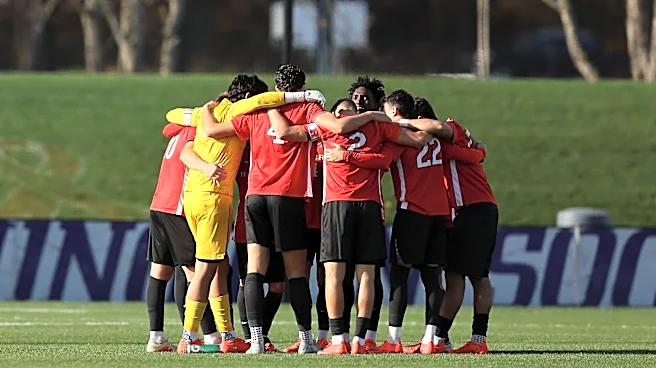
The NCAA Division III Men’s Soccer Committee has officially announced the 64 teams selected to compete in the 2026 NCAA Division III Men’s Soccer Championship. This year's field includes 42 conferences that received automatic qualification, while the remaining
22 berths were awarded as at-large selections. These at-large bids include institutions from automatic-qualifying conferences that did not secure their conference championship. The tournament structure dictates that all games leading up to the national semifinals will be hosted on the campuses of the competing institutions. The initial rounds will feature 16 sites, each hosting four teams for first- and second-round competition scheduled for November 13-14 or November 14-15. Winners from the second round will advance to one of four sectional sites on November 20-21 or November 21-22. The four sectional champions will then proceed to the national semifinals on December 3 at Historic Crew Stadium in Columbus, Ohio, with Capital University and Greater Columbus Sports Commission serving as hosts. The national championship game is slated for December 5. The Division III women’s soccer national semifinals and championship games will also take place at Historic Crew Stadium on December 4 and December 6, respectively.
Why It's Important?
The announcement of the NCAA Division III Men's Soccer Championship field is a significant event for collegiate athletics, marking the culmination of the regular season and conference tournaments for many teams. For the 64 selected institutions, it represents an opportunity to compete for a national title, bringing prestige to their athletic programs and universities. The tournament format, with early rounds hosted on campus, provides a unique home-field advantage for some teams and fosters local community engagement. The inclusion of both automatic qualifiers and at-large bids ensures a diverse and competitive field, rewarding both conference champions and strong performing teams from competitive leagues. The national semifinals and championship being held at Historic Crew Stadium, a professional soccer venue, elevates the profile of Division III soccer, offering student-athletes a high-level competitive experience. This event also generates significant interest among fans, alumni, and prospective student-athletes, contributing to the overall health and visibility of collegiate soccer.
What's Next?
Following the announcement, the 64 selected teams will now prepare for the intense competition of the NCAA Division III Men's Soccer Championship. The first and second rounds are scheduled for November 13-14 or November 14-15, with teams traveling to one of the 16 host sites. Coaches will finalize game strategies, and players will focus on training and recovery to peak for the tournament. The winners will advance to the sectional rounds on November 20-21 or November 21-22, where the competition will further intensify as teams vie for a spot in the national semifinals. The ultimate goal for these teams is to reach Historic Crew Stadium in Columbus, Ohio, for the national semifinals on December 3 and potentially the championship game on December 5. The tournament will also feature the Division III women’s soccer national semifinals and championship games on December 4 and December 6, creating a comprehensive collegiate soccer championship experience. Fans and media will closely follow the bracket, anticipating upsets and standout performances as teams battle for the national title.
Beyond the Headlines
Beyond the immediate competition, the NCAA Division III Men's Soccer Championship plays a crucial role in the broader landscape of collegiate sports. It provides a platform for student-athletes to showcase their talents, potentially opening doors for post-collegiate opportunities in soccer or other fields. The tournament also highlights the academic and athletic balance emphasized in Division III, where student-athletes pursue their education while competing at a high level. The selection process and tournament structure reflect the NCAA's commitment to fair play and competitive equity across its member institutions. Furthermore, the championship serves as a significant recruiting tool for participating universities, attracting future student-athletes who aspire to compete at a national level. The event also fosters a sense of community and pride within the participating institutions, uniting students, faculty, alumni, and local supporters behind their teams. The legacy of past champions, such as Tufts, the defending national champion, inspires current teams to strive for excellence and leave their mark on collegiate soccer history.