



What's Happening?
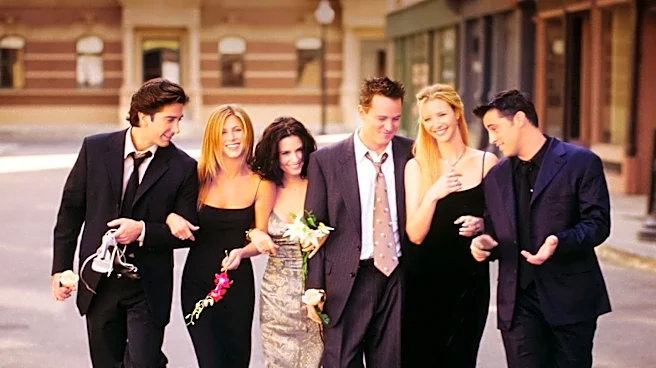
Actor David Schwimmer initially turned down the role of Ross Geller in the hit sitcom 'Friends,' even though the character was specifically written with him in mind by creators Marta Kauffman and David Crane. Schwimmer's reluctance stemmed from a negative
experience on a previous short-lived Fox sitcom, 'Monty,' where he felt his creative input was not valued and he was treated as a 'prop.' This experience led him to want to focus on his Chicago-based theatre group, Lookingglass Theatre Company, and avoid further television work. Despite his initial rejection, his agent eventually persuaded him to read the script. He was also encouraged by legendary television director James Burrows to meet the team. Schwimmer ultimately changed his mind upon learning that the role was tailored for him and that 'Friends' was designed as an ensemble cast, a collaborative environment more akin to his theatre background.
Why It's Important?
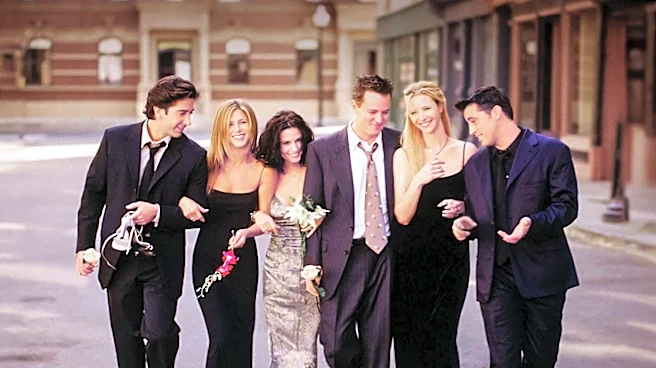
This revelation highlights the often-unseen complexities behind major casting decisions in the entertainment industry and the personal experiences that shape actors' career choices. Had Schwimmer not changed his mind, the iconic character of Ross Geller, and by extension the dynamic of the entire 'Friends' ensemble, would have been significantly different. The show's immense global success and cultural impact, which turned its six lead actors into household names, underscore the critical nature of such casting choices. The story also sheds light on the challenges actors face in navigating early career disappointments and the pressure to accept roles that may not align with their artistic aspirations, even when presented with seemingly golden opportunities.
What's Next?
While 'Friends' concluded in 2004, the enduring popularity of the show through syndication and streaming platforms means that discussions and retrospectives about its production and casting continue to resonate with audiences. The anecdote about Schwimmer's initial hesitation adds another layer to the show's rich history, potentially sparking renewed interest in behind-the-scenes stories and the creative processes that shaped one of television's most beloved comedies. For actors and industry professionals, this story serves as a reminder of the unpredictable nature of career paths and the long-term impact of early decisions.
Beyond the Headlines
The narrative of David Schwimmer's initial rejection of the 'Friends' role delves into the psychological toll that early career setbacks can have on artists. His desire to prioritize collaborative theatre over what he perceived as a creatively stifling television environment speaks to a broader tension within the entertainment industry between artistic integrity and commercial success. The fact that the creators were so committed to him, even writing the part specifically for him, underscores the importance of a strong creative vision and the belief in a particular actor's ability to embody a character. This story also subtly touches upon the 'what if' scenarios that are common in popular culture, inviting audiences to imagine alternative realities where different actors might have taken on these iconic roles.