

What's Happening?
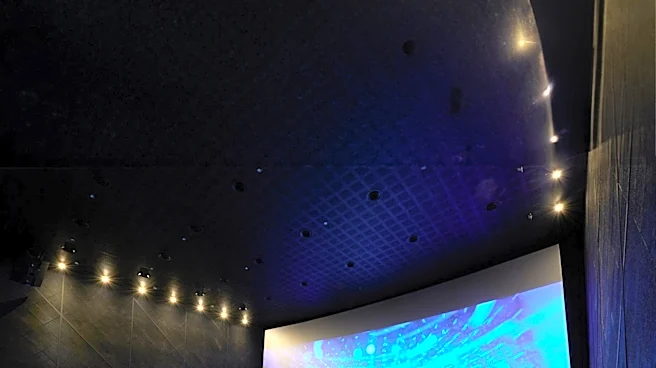
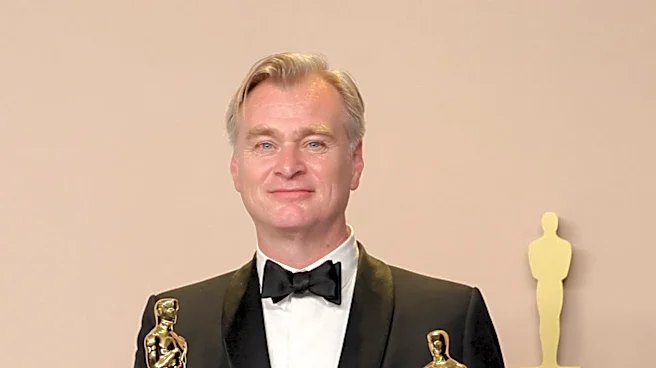
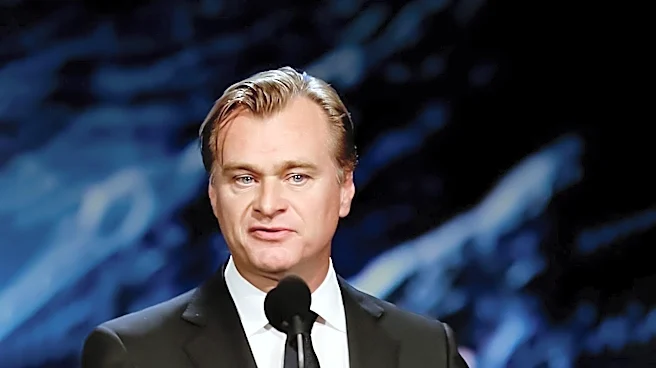
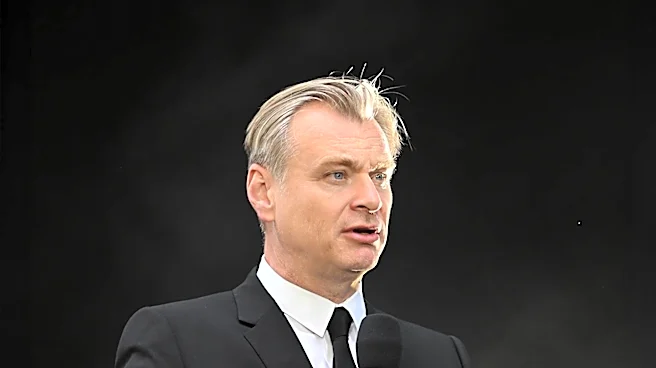
Christopher Nolan's career, characterized by a commitment to analog filmmaking and physical craft, has played a significant role in revitalizing IMAX as a dominant format in the film industry. Nolan's films, known for their meticulous attention to detail
and refusal to conform to digital norms, have grossed over $5 billion, demonstrating the commercial viability of traditional filmmaking techniques. His approach emphasizes the importance of tactile, hands-on processes, such as shooting on celluloid and editing by hand, which contrasts with the industry's shift towards digital workflows. Nolan's success is attributed to his ability to create immersive, high-quality cinematic experiences that resonate with audiences, reinforcing the value of IMAX as a premium viewing format.
Why It's Important?
Nolan's impact on the film industry highlights the enduring appeal of analog filmmaking in an era dominated by digital technology. His success underscores the potential for traditional techniques to coexist with modern innovations, offering filmmakers a diverse range of tools to enhance storytelling. The resurgence of IMAX, driven by Nolan's films, reflects a broader trend towards experiential cinema, where audiences seek immersive, high-quality viewing experiences. This trend has significant implications for the film industry, influencing production decisions, distribution strategies, and theater operations. It also reinforces the importance of preserving and promoting diverse filmmaking practices to cater to varied audience preferences.
Beyond the Headlines
Nolan's commitment to analog filmmaking raises important questions about the future of cinema and the role of technology in storytelling. His approach challenges the notion that digital innovation is the sole path to success, suggesting that creativity and craftsmanship remain central to the art of filmmaking. The resurgence of IMAX also highlights the potential for traditional formats to drive innovation in theater design and audience engagement. As the industry continues to evolve, Nolan's work serves as a reminder of the value of diverse perspectives and approaches in shaping the future of cinema.