







What's Happening?
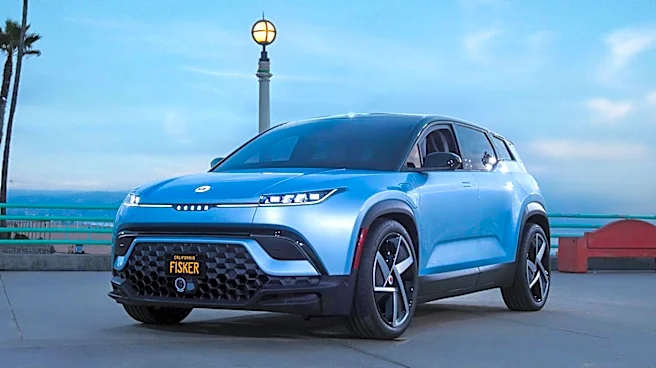
Fisker Inc., an electric vehicle company founded by Henrik Fisker and Geeta Gupta-Fisker in 2016, has finalized its liquidation plan. The company, known for its all-electric SUV, the Fisker Ocean, filed for Chapter 11 bankruptcy protection in June 2024.
The bankruptcy court approved the liquidation plan, which became effective on October 17, 2024. A liquidating trust has been established to manage the company's remaining assets and claims. Fisker Inc. had adopted a business model that relied on external manufacturing partners to reduce traditional automotive production costs. However, this approach did not prevent the company from encountering significant financial and operational difficulties, ultimately leading to its bankruptcy and subsequent liquidation. The company's operations are no longer those of a functioning vehicle manufacturer.
Why It's Important?
The liquidation of Fisker Inc. underscores the significant challenges and financial pressures faced by new entrants in the competitive electric vehicle market. Despite innovative designs and a focus on sustainability, the company's inability to sustain operations highlights the complexities of automotive manufacturing, including the need for robust financial management, stringent quality control, reliable software, effective supplier coordination, and comprehensive customer support. This event serves as a cautionary tale for other EV startups, demonstrating that even with market interest and a compelling product, operational execution and financial stability are paramount for long-term survival. The outcome impacts investors, employees, and customers who purchased Fisker Ocean vehicles, as the company's dissolution affects warranty support, parts availability, and resale values.
What's Next?
Following the effective date of the liquidation plan on October 17, 2024, the established liquidating trust will proceed with administering Fisker Inc.'s remaining assets and addressing outstanding claims. This process typically involves selling off assets to repay creditors according to legal priorities. For former customers, the future of vehicle servicing, parts availability, and warranty claims remains uncertain, as the company is no longer operating as a vehicle manufacturer. The broader electric vehicle industry may see increased scrutiny on the business models and financial viability of other startups, potentially leading to consolidation or more cautious investment in the sector. The liquidation also marks a significant point in Henrik Fisker's entrepreneurial career, prompting re-evaluation of his ventures in the automotive industry.
Beyond the Headlines
The collapse of Fisker Inc. extends beyond a typical business failure, raising deeper questions about the sustainability of the 'asset-light' manufacturing model in the automotive industry. While outsourcing production can reduce initial capital expenditure, it introduces dependencies and requires exceptional oversight in areas like quality control and supply chain management, which Fisker Inc. evidently struggled with. This event also highlights the intense capital requirements and operational complexities inherent in bringing a new vehicle to market, even for electric vehicles that often benefit from significant investor enthusiasm. The outcome may influence future investment strategies in the EV sector, potentially favoring companies with more integrated production capabilities or those demonstrating clearer paths to profitability and operational stability. It also underscores the importance of customer trust and long-term support in an industry where product reliability and after-sales service are critical for brand reputation.