



What's Happening?
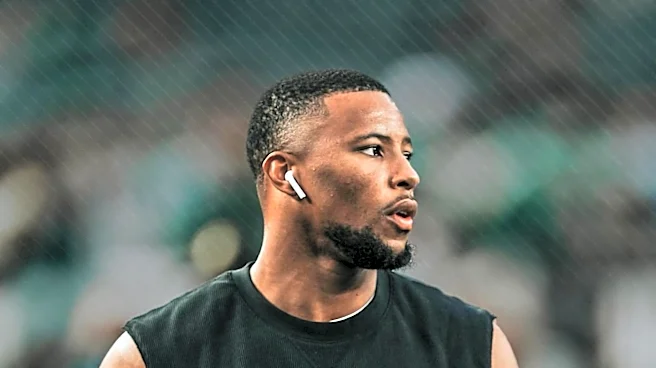
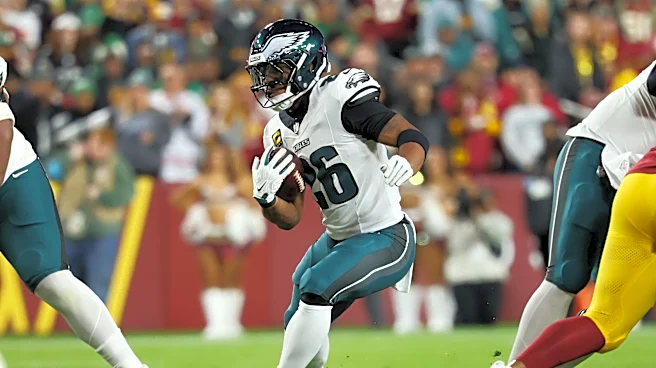
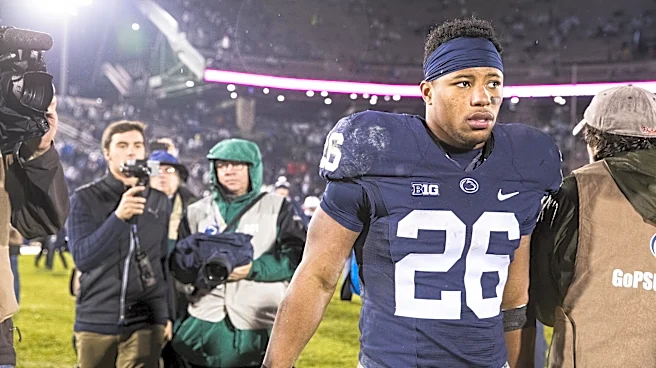
The Philadelphia Eagles are assessing the multifaceted value of running back Saquon Barkley as they consider a potential roster rebuild. Barkley, who is under contract through 2028, is being evaluated not only for his on-field performance and rushing
totals but also for his leadership qualities. He was named a team captain for the 2026 season, a decision that the team highlighted in its March 2025 extension announcement, emphasizing his work ethic and role as a teammate. This evaluation comes as the Eagles contemplate how to build around their existing commitments and integrate younger talent into the offense. The discussion focuses on Barkley's ability to provide continuity and support the development of other players, particularly in areas like protection responsibilities and timing with the quarterback, which extend beyond individual rushing statistics.
Why It's Important?
The Eagles' approach to Saquon Barkley's role is significant for several reasons. For the team, it represents a strategic decision on how to balance veteran leadership with the development of a younger offense, especially during a rebuild. Barkley's established presence could offer stability and a recognizable centerpiece, potentially creating favorable down-and-distance situations and enhancing play-action effectiveness. However, there is also an opportunity cost to consider; allocating significant work to Barkley might limit opportunities for other developing backs to gain meaningful experience. This internal debate highlights the complexities of roster management in professional sports, where long-term strategic goals must be weighed against immediate performance needs and financial commitments. The outcome will influence the team's offensive identity and its trajectory in the coming seasons.
What's Next?
The Eagles will continue to define the backfield around Saquon Barkley, focusing on how to integrate his leadership and on-field contributions with the development of other players. This involves making decisions about the distribution of workload and responsibilities among running backs to ensure a sustainable offensive identity. The team's plan will need to clarify Barkley's specific role, the complementary work available to other backs, and the situations in which the offense can succeed through alternative options. These decisions will be crucial for shaping the Eagles' roster for the upcoming seasons and will likely involve ongoing evaluations of player performance, development, and strategic fit within the team's broader objectives.
Beyond the Headlines
The discussion surrounding Saquon Barkley's role with the Eagles extends beyond typical player evaluations, touching upon the broader philosophical challenges of team building in professional sports. It underscores the tension between valuing established veteran leadership and fostering new talent, particularly when a team is considering a 'rebuild.' This scenario highlights how intangible qualities like leadership, while difficult to quantify, can be deemed essential for team cohesion and the mentorship of younger players. The Eagles' decision-making process will reflect a nuanced understanding of how to leverage both on-field production and off-field influence to achieve long-term success, rather than solely relying on statistical output. It also brings to light the financial implications of existing contracts and how they shape a team's flexibility in pursuing strategic changes.