


What's Happening?
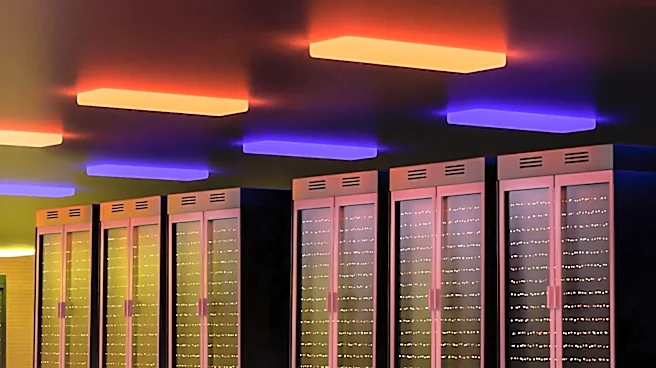
A new report by BloombergNEF (BNEF), commissioned by Bloomberg Philanthropies, projects that global data center electricity demand will nearly quadruple to 2,354 terawatt-hours by 2035, equivalent to 7% of global electricity consumption. This surge is driven
by developers' urgent need to bring new computing capacity online rapidly. The report, 'Powering the Data Center Boom: How Grid Policy Can Deliver Clean Power Faster,' highlights that grid constraints in the U.S. and Europe are delaying new connections for large loads, prompting some developers to build on-site gas-fired power plants while awaiting grid access. BNEF has tracked 181 gigawatts of announced gas-fired generation proposed alongside data centers, with over 90% of this capacity located in the U.S. If all these U.S. projects were built and operated, they could emit approximately 345 million metric tons of carbon dioxide equivalent annually, 152 MtCO2e more than if the data centers were supplied by the average U.S. grid electricity.
Why It's Important?
The projected surge in data center power demand poses significant climate challenges, particularly in the U.S. The potential for a substantial increase in carbon emissions from on-site gas-fired power plants could undermine decarbonization efforts and create a long-term fossil-fuel lock-in risk. While these plants are often intended as temporary solutions during grid connection delays, their economic viability once operational could encourage continued generation, exacerbating environmental impact. The report emphasizes that ensuring new data centers are grid-connected is the more sustainable option in developed markets. The current grid limitations and the 'speed to power' imperative for data center developers highlight a critical need for policy interventions that accelerate grid connections and promote cleaner generation sources. This situation impacts energy policy, infrastructure development, and the overall trajectory of climate action in the U.S.
What's Next?
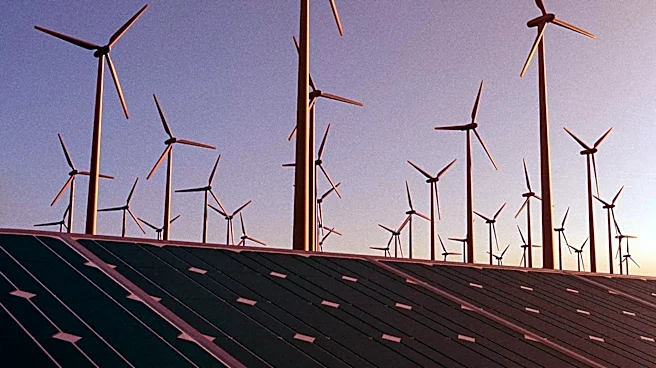
Policies aimed at accelerating grid connections for data centers are crucial to limit near-term emissions impacts and mitigate fossil-fuel lock-in risks in developed markets like the U.S. The report reviews various policy approaches, including faster grid connections, financial commitments, flexible connections, special zones, and clean-power procurement. Continued decarbonization of the broader power system remains vital. For emerging markets, the challenge differs, with BNEF finding that grid-connected data centers can sometimes be worse than on-site gas in regions heavily reliant on coal. This underscores the need for policies that enable more clean generation alongside new power demand. The findings suggest that policymakers and utility companies in the U.S. will need to prioritize grid modernization and expansion, alongside incentives for renewable energy integration, to manage the environmental impact of the booming data center industry effectively.
Beyond the Headlines
The BNEF report uncovers a deeper tension between rapid technological advancement, particularly in AI, and climate sustainability goals. The economic pressures driving data center expansion are so immense that they are leading to decisions that could have long-lasting environmental consequences. This situation highlights the need for a holistic approach that integrates energy planning with technological development. It also raises questions about the responsibility of tech companies to ensure their growth is sustainable, not just economically, but environmentally. The potential for 'fossil-fuel lock-in' due to temporary solutions becoming permanent underscores the importance of proactive policy and investment in renewable energy infrastructure. This challenge could also spur innovation in energy storage and smart grid technologies to better accommodate intermittent renewable sources and manage peak demand from data centers.