




What's Happening?
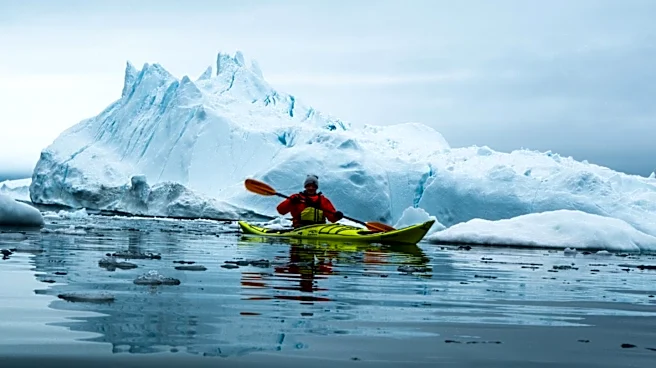
A sea kayaking expedition recently explored the remote Upernavik region on the north-west coast of Greenland. The journey, led by experienced guide Olly Sanders, involved a team of six paddlers with varying levels of experience. The expedition aimed to
navigate the coastline, glaciers, and ice formations of the Arctic environment. Participants traveled from Copenhagen to Upernavik, experiencing the changing landscape as they moved further north. The team encountered diverse weather conditions, including warm spells, fog, wind, rain, and snow, highlighting the unpredictable nature of the Arctic. A notable highlight was a multi-day encounter with a humpback whale, which became a consistent presence around their camp and paddling area. The expedition emphasized the simplicity of life in a sea kayak, where all necessities must fit within the vessel, and the importance of the shared experience among the paddlers.
Why It's Important?
This expedition underscores the growing interest in extreme adventure tourism and scientific exploration in the Arctic regions. Such ventures contribute to a deeper understanding of these fragile ecosystems, which are significantly impacted by global climate change. Documenting these experiences can raise awareness about the unique beauty and vulnerability of the Arctic, potentially influencing conservation efforts and sustainable tourism practices. For the participants, it represents a profound personal challenge and an opportunity to connect with nature in an unparalleled way. The detailed account of navigating sea ice and encountering wildlife provides valuable insights for future expeditions and researchers studying Arctic wildlife behavior and ice dynamics. The narrative also highlights the importance of experienced leadership and teamwork in challenging environments, offering lessons applicable to various fields requiring collaboration and resilience.
What's Next?
While the source does not explicitly state future plans for this specific expedition, similar ventures are likely to continue given the increasing accessibility and interest in Arctic exploration. The insights gained from this trip, particularly regarding navigation through sea ice and wildlife encounters, could inform future guiding practices and safety protocols for Arctic sea kayaking. The experience of the expedition leader, Olly Sanders, who has spent over 20 years sea kayaking and climbing in Greenland, suggests a continued legacy of Arctic exploration and mentorship. Future expeditions might focus on different regions of Greenland or other Arctic territories, potentially incorporating more scientific research components to monitor environmental changes. The personal accounts and photographs from such trips often serve as powerful tools for environmental advocacy and educational outreach, inspiring others to learn about and protect these remote parts of the world.
Beyond the Headlines
The expedition to Upernavik delves into the broader implications of human interaction with extreme natural environments. It highlights the ethical considerations of tourism in pristine and vulnerable regions, emphasizing the need for minimal impact and respect for local ecosystems and wildlife. The narrative subtly touches upon the psychological and emotional aspects of enduring challenging conditions, fostering resilience and a deeper appreciation for nature. The encounter with the humpback whale, described as humbling and unplanned, speaks to the profound and often unexpected connections that can be forged between humans and the natural world. This type of immersive experience can lead to a shift in perspective, promoting a more holistic understanding of our planet and our place within it. Furthermore, the expedition serves as a testament to the enduring human spirit of exploration and the pursuit of unique, transformative experiences beyond the confines of modern civilization.