




What's Happening?
The Agriculture and Horticulture Development Board (AHDB) has identified several factors contributing to uncertainty in British milk production for 2026/27, with bluetongue virus serotype 3 being a significant concern. The virus is impacting livestock
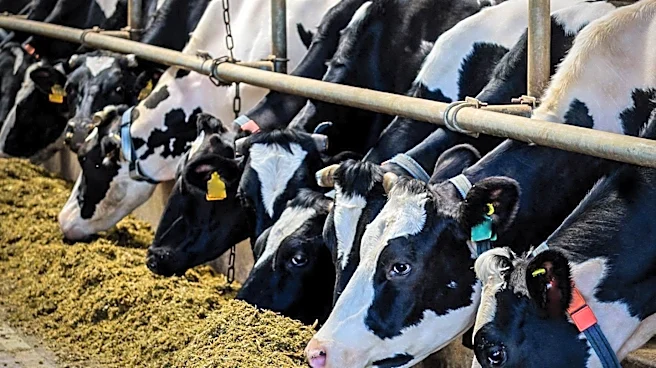
health and reproduction, thereby affecting production and replacement planning in exposed areas. This health issue adds to existing pressures such as herd contraction, winter forage availability, and rising agricultural input costs. The AHDB's Milk Forecasting Forum met to assess these risks, which will inform a revised production forecast later in October. The current benchmark, set in June, estimates 12.91 billion liters for the 2026/27 milk year, a projected decline of 0.9%. Farmers' decisions regarding retaining animals versus selling them for beef, influenced by high beef prices, also play a role in the availability of replacement heifers and future milk output. Reduced forage quantity and quality due to hot and dry conditions further compound these challenges, potentially requiring increased purchases of supplementary feed.
Why It's Important?
The pressures identified by AHDB, particularly the bluetongue virus, have significant implications for the British dairy industry and broader agricultural sector. A decline in milk production can lead to increased prices for dairy products, affecting consumers and potentially contributing to food inflation. For farmers, the health of their livestock directly impacts their economic viability; disease outbreaks like bluetongue can result in reduced yields, increased veterinary costs, and disruptions to breeding cycles. The need to purchase more supplementary feed due to poor forage availability further strains farmers' finances, especially with rising costs of fertilizers, fuel, and other inputs. This situation highlights the vulnerability of agricultural supply chains to environmental conditions and disease, underscoring the importance of robust animal health strategies and economic support for farmers to maintain stable food production and rural livelihoods.
What's Next?
The AHDB is expected to release a revised production forecast later in October, which will provide a more quantified indication of how these identified risks, including the bluetongue virus, will affect the milk outlook for 2026/27. Dairy farmers will need to make critical decisions regarding herd management, feed strategies, and vaccination protocols in response to the bluetongue threat and other economic pressures. Processors will closely monitor the updated forecasts and subsequent milk delivery data to assess raw milk volumes available for different manufacturing operations, potentially adjusting production schedules and allocation decisions. The interaction of herd numbers, feed supplies, disease conditions, and milk pricing over the coming months will determine the final outcome for the British dairy sector, with ongoing monitoring of international disruptions also influencing input prices and export demand.
Beyond the Headlines
The situation with the bluetongue virus and other pressures on British milk production points to deeper systemic challenges within modern agriculture, including the increasing impact of climate change on forage availability and the heightened risk of disease transmission in livestock populations. The interconnectedness of animal health, environmental factors, and economic decisions creates a complex web of dependencies. This scenario underscores the need for integrated approaches to agricultural policy that consider ecological resilience, biosecurity measures, and economic sustainability for farmers. Furthermore, it highlights the ethical considerations surrounding animal welfare in the face of disease outbreaks and the broader societal implications of food security and the environmental footprint of food production. Long-term strategies may need to focus on developing more resilient farming systems, investing in disease surveillance and prevention, and fostering greater collaboration across the agricultural supply chain to mitigate future shocks.