




What's Happening?
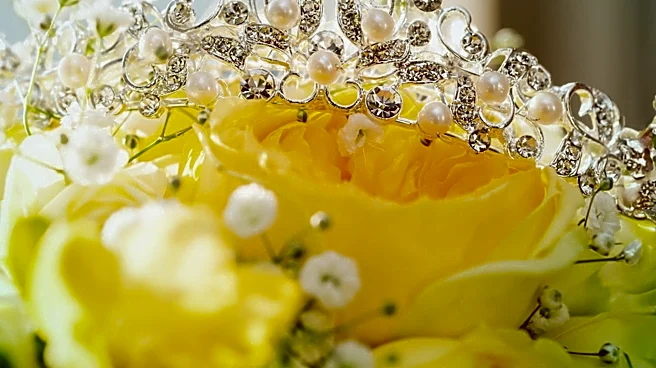
Princess Alexandra, daughter of Princess Benedikte, wore a magnificent floral tiara at her 2019 wedding to Count Michael Ahlefeldt-Laurvig-Bille. This tiara, whose precise origin is unknown but has been in the family since the 19th century, likely inherited
from the Bille-Brahe family, was also worn by Count Michael's daughter-in-law at a recent wedding. Count Michael Ahlefeldt-Laurvig-Bille, born February 26, 1965, is the current owner of Egeskov Castle, located in Kværndrup on Southern Funen, having taken over from his father, Count Claus Ahlefeldt-Laurvig-Bille, in 1992. His mother is chamberlain Merete Lüttichau, a close friend of Queen Margrethe and her sisters. Count Michael's sister, Susanne Vind, a former lady-in-waiting to Countess Alexandra, is married to chamberlain and estate owner Erik Vind, with whom she has children Rosemarie, Georg, and Nonni Vind. Count Michael has children from his first marriage to Margrethe Kirketerp-Møller: Count Gregers Carl Preben Ahlefeldt-Laurvig-Bille (born May 31, 1995) and Marie-Sophie (born April 2, 1993), married to Anders Groth Andersen. From his second marriage to Caroline Søeborg Ahlefeldt-Laurvig-Bille, he is father to Count Julius Ahlefeldt-Laurvig-Bille (born June 2007) and Countess Iselin Ahlefeldt-Laurvig-Bille (born July 24, 2009). Princess Alexandra's children from her marriage to Count Jefferson-Friedrich zu Pfeil und Klein-Ellguth are Count Richard (born September 14, 1999) and Countess Ingrid (born August 16, 2003).
Why It's Important?
The use of such a historic tiara by Princess Alexandra and subsequently by her daughter-in-law highlights the enduring traditions and continuity within European royal and noble families. These practices underscore the importance of heritage and lineage, where significant family heirlooms are passed down through generations, symbolizing continuity and connection to the past. For those interested in royal history and aristocratic customs, this event provides a tangible link to centuries-old traditions. The detailed lineage provided for Count Michael Ahlefeldt-Laurvig-Bille and Princess Alexandra illustrates the intricate web of relationships within European nobility, often involving intermarriage and shared social circles. This perpetuates a sense of identity and belonging within these elite groups, maintaining their distinct cultural practices and historical narratives. The public display of such traditions, even in a modern context, reinforces the cultural significance of these families and their role in preserving historical artifacts and customs.
What's Next?
The continued tradition of wearing significant family heirlooms, such as the floral tiara, suggests that these practices will likely persist in future generations of the Ahlefeldt-Laurvig-Bille and related noble families. Future weddings and significant family events are expected to continue showcasing these historical artifacts, maintaining a connection to their ancestral heritage. The detailed family tree provided indicates a large and interconnected network of relatives, ensuring that these traditions will have many opportunities to be observed and passed on. The public and media, particularly those interested in royal and aristocratic affairs, will likely continue to follow these events, further cementing the cultural relevance of these families and their customs. The preservation of Egeskov Castle under Count Michael's ownership also implies a continued commitment to maintaining the family's historical properties and the traditions associated with them.
Beyond the Headlines
Beyond the immediate event of the wedding, the use of the historic floral tiara reflects a broader cultural phenomenon of valuing and preserving ancestral heritage. In an increasingly globalized and modern world, the adherence to such traditions by noble families serves as a reminder of historical continuity and the importance of roots. This practice can be seen as a form of cultural stewardship, where families take on the responsibility of safeguarding artifacts and customs that represent their lineage and, by extension, a part of national history. The tiara, as a symbol, transcends its material value, embodying stories, generations, and a sense of identity. This also subtly reinforces the social structures and historical narratives associated with nobility, even in societies where their political power has diminished. The public's fascination with such events speaks to a collective interest in history, tradition, and the romanticized image of royalty and aristocracy.