




What's Happening?
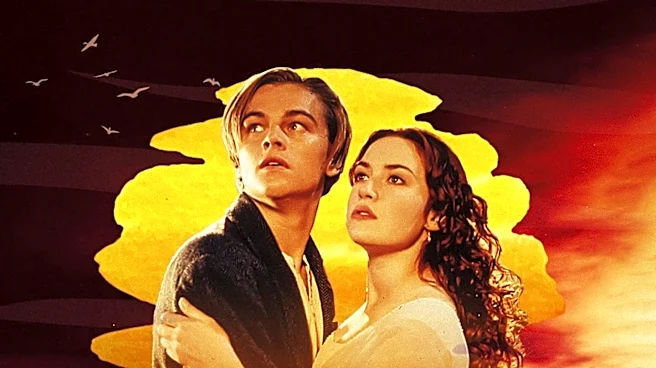
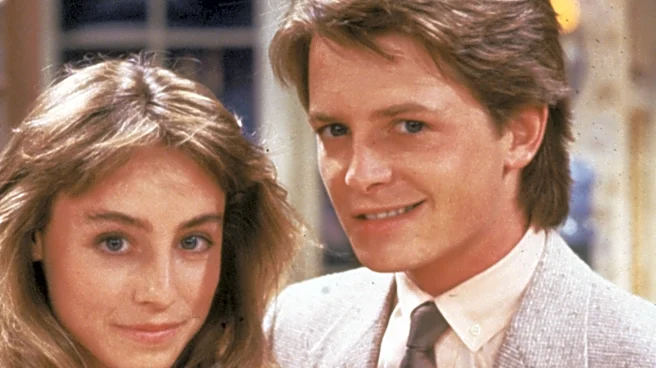
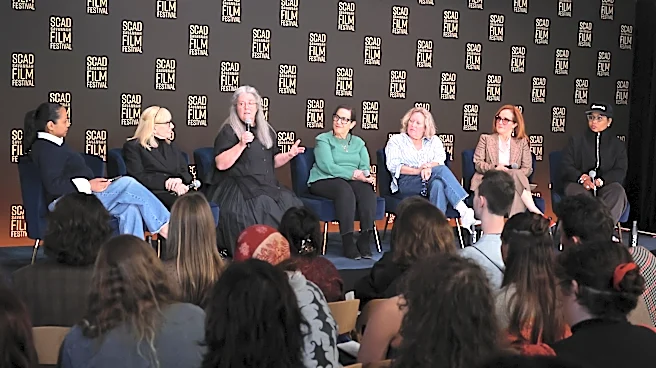
The distinctive style of Marty McFly, portrayed by Michael J. Fox in 'Back to the Future,' is being recognized for its enduring cultural relevance. Costume designer Deborah Lynn Scott, an Oscar winner for 'Titanic,' crafted McFly's look, which included
light-wash jeans, a checked shirt over a T-shirt, white Nike trainers, a two-tone denim jacket, and a prominent orange puffy vest. This ensemble was reportedly developed after Michael J. Fox replaced Eric Stoltz during filming, with earlier plans calling for plainer attire. The vest, in particular, was inspired by producer and co-writer Bob Gale spotting a man in a similar vest and conceiving a 'life preserver' gag for the 1955 setting of the film. The film, released in 1985, was the highest-grossing movie of that year and was added to the National Film Registry by the Library of Congress in 2007.
Why It's Important?
Marty McFly's fashion choices have transcended typical movie costumes, becoming an iconic representation of 1980s youth culture and a timeless example of character-driven costume design. The outfit's casual, relatable nature resonated with audiences, making McFly's style accessible and memorable. Unlike many period-specific outfits that become dated, McFly's layered look, particularly the orange vest, remains instantly recognizable and frequently replicated by fans for conventions and Halloween. This enduring appeal highlights how effective costume design can contribute significantly to a film's legacy and cultural impact, influencing fashion and popular culture for decades. The story underscores the power of subtle yet impactful visual storytelling in cinema.
What's Next?
The continued discussion and analysis of Marty McFly's style suggest that its influence will persist, particularly as 'Back to the Future' remains widely available on streaming platforms and is celebrated through anniversaries and fan events. This ongoing engagement ensures that new generations will continue to encounter and appreciate the film's costume design. The recognition of Deborah Lynn Scott's work on this iconic character may also inspire future costume designers to consider how everyday fashion can be elevated to cinematic significance. The film's status as a cultural touchstone means that its elements, including its fashion, will likely continue to be referenced and reinterpreted in various forms of media and fan culture.
Beyond the Headlines
The enduring popularity of Marty McFly's outfit offers a deeper insight into the psychology of character identification and the role of authenticity in costume design. The clothes were not designed to be high fashion but rather to reflect a relatable, everyday teenager, which paradoxically made them more iconic. The humor derived from the 1955 characters' reactions to McFly's 'modern' attire also illustrates how clothing can serve as a powerful narrative device, highlighting cultural shifts and generational differences. This phenomenon suggests that sometimes the most impactful fashion in film is not the most extravagant, but rather that which is most integral to the character's identity and the story's progression, creating a lasting connection with the audience.