




What's Happening?
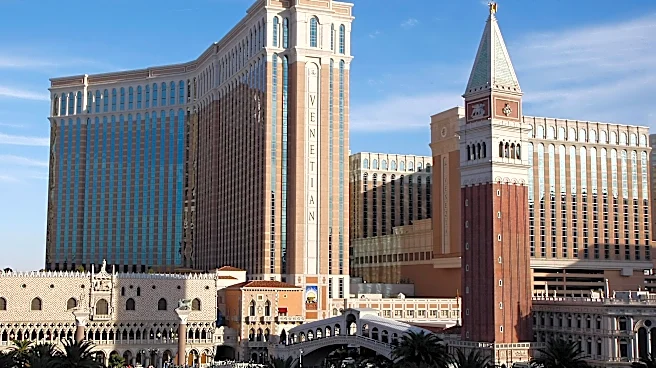
Las Vegas Sands (LVS) is positioned as a more favorable dividend investment compared to Amcor (AMCR) for the next decade, according to an investment analysis. Las Vegas Sands plans to increase its quarterly dividend by 20% starting in Q1 2027, bringing
it to $0.36 per share from the current $0.30. This decision was made despite the company missing Wall Street's third-quarter estimates due to softer high-end gambling. Crucially, Las Vegas Sands maintains a dividend payout ratio of 37% of free cash flow over the past twelve months, indicating significant financial flexibility. In contrast, Amcor, while offering a higher current yield, has a dividend payout ratio of 156% of free cash flow for the same period, raising concerns about its sustainability. Amcor also recently lowered its earnings outlook due to higher energy and distribution costs.
Why It's Important?
The comparison between Las Vegas Sands and Amcor highlights critical factors for income investors: dividend growth potential versus current yield and payout sustainability. Las Vegas Sands' lower payout ratio suggests a more secure dividend with ample room for future increases and capital allocation for growth projects or share repurchases. This financial prudence is particularly appealing for long-term investors seeking reliable income growth. Amcor's high payout ratio, exceeding its free cash flow, indicates potential strain on its ability to maintain or significantly grow its dividend, especially with a lowered earnings outlook and higher debt levels. This situation could lead to a re-evaluation of Amcor's dividend safety by investors, potentially impacting its stock performance and investor confidence.
What's Next?
For Las Vegas Sands, the focus will be on the execution of its planned dividend increase in Q1 2027 and its ability to sustain free cash flow generation, particularly as it continues significant capital expenditures on its Singapore expansion. Investors will also watch for improvements in high-end gambling demand in Macao and Singapore, which impacted recent earnings. For Amcor, the key will be its ability to recover free cash flow, as management expects, and to reduce its debt-to-EBITDA ratio to its target of approximately 3x by the end of 2027. The market will closely monitor whether Amcor can achieve these financial targets while continuing its commitment to 'modestly increase the dividend,' given its current high payout ratio.
Beyond the Headlines
This investment analysis underscores a broader principle in dividend investing: a high current yield does not always equate to a superior long-term investment. The sustainability and growth potential of a dividend, often reflected in its payout ratio and free cash flow coverage, are paramount. Las Vegas Sands' strategy of retaining more free cash flow allows for strategic investments and flexibility, which can lead to greater long-term shareholder value, even if the immediate yield is lower. Conversely, companies with unsustainably high payout ratios may face difficult choices between maintaining dividends, funding growth, or reducing debt, potentially leading to dividend cuts or slower growth. This scenario highlights the importance of fundamental financial analysis beyond just headline dividend yields.