







What's Happening?
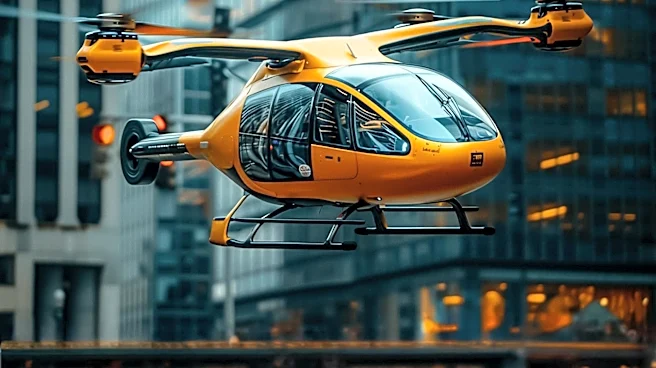
Archer Aviation announced plans to establish three electric vertical takeoff and landing (eVTOL) aircraft networks in Texas, connecting major airports to business hubs in Fort Worth-Dallas, Houston, and Austin. This initiative aims to reduce travel times
significantly, turning 60-90 minute drives into 10-20 minute flights using Archer’s all-electric Midnight air taxi. In North Texas, the network will link Dallas Fort Worth International Airport, Arlington Municipal Airport, and Perot Field Fort Worth Alliance Airport with key business centers like The Star in Frisco, as well as Dallas Love Field and Addison Airport. City aviation officials are supporting this development with awards, including $92,500 for charging infrastructure at Fort Worth Meacham International Airport, part of a larger $477,500 fund from the Regional Transportation Council for electric aircraft chargers across various Texas airports.
Why It's Important?
This development is significant for addressing traffic congestion in Texas's fastest-growing metropolitan areas, which currently costs the state billions in lost time and productivity. By offering a faster, more efficient mode of transportation, Archer Aviation's air taxi network could alleviate commuter burdens and enhance connectivity between critical business districts and airports. The deployment of eVTOL technology also represents a step forward in sustainable transportation, promising low aircraft noise and zero operating emissions. Furthermore, the investment in charging infrastructure at multiple airports across Texas, supported by the Regional Transportation Council and the White House’s eVTOL pilot program, positions Texas as a leader in integrating next-generation aviation technologies into the national transportation system.
What's Next?
Archer Aviation plans to showcase its air taxis during the Formula 1 United States Grand Prix event in Austin from October 22-25, utilizing an F-1 Circuit Helipad. This public demonstration will offer Texans a glimpse of the future of air travel. The company also intends to operate air taxis in Los Angeles during the 2028 Olympic Games, further expanding its operational footprint. The ongoing pilot program, which includes Joby Aviation and Wisk Aero, will continue testing at various North Texas sites to determine how advanced air mobility can be effectively integrated into the nation’s transportation system. The charging infrastructure being installed at Texas airports is expected to lay the groundwork for future passenger air taxi flights, marking the final phase of the state pilot program.
Beyond the Headlines
The introduction of electric air taxi networks in major U.S. cities like those in Texas could trigger broader shifts in urban planning and regional development. Reduced commute times might decentralize business hubs or alter residential patterns, as proximity to traditional business districts becomes less critical. Ethically, the accessibility and affordability of such services will be crucial to ensure they benefit a wide range of the population and do not exacerbate existing inequalities in transportation access. Legally, the integration of eVTOLs into existing airspace will require significant regulatory adjustments and safety protocols. Culturally, the sight of air taxis could normalize advanced air mobility, potentially paving the way for more widespread adoption of similar technologies and reshaping public perception of air travel as an everyday mode of transport.