





What's Happening?
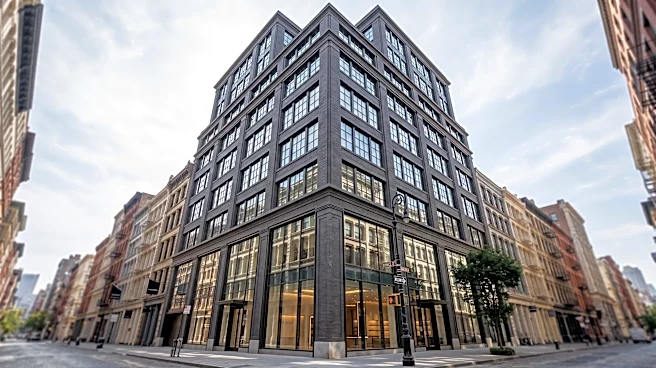
Class B office visitation in New York City has stabilized at 72% of pre-pandemic levels, a range maintained for the past two years, according to a Real Estate Board of New York (REBNY) analysis of 200 properties across Manhattan, Brooklyn, and Queens.
Midtown performed best among submarkets, reaching 89% of its pre-pandemic activity, while Lower Manhattan and Brooklyn/Queens hovered around 70%. Midtown South, though lagging, has shown recent improvement. Notably, 20% of the studied properties now exceed their pre-pandemic visitation rates. New York City's Class B inventory comprises over 235 million square feet across 1,500 buildings, housing a diverse range of tenants including small and mid-sized businesses, nonprofits, creative firms, and technology startups. Properties with experienced ownership, strong transit access, and diversified tenant rosters have demonstrated faster recovery compared to those affected by major tenant losses or coworking contractions.
Why It's Important?
The stabilization of Class B office visitation at 72% of pre-pandemic levels in New York City signifies a 'new normal' for a significant segment of the commercial real estate market. This trend is crucial for the city's economic recovery, as Class B buildings are vital for small and mid-sized businesses, which are often drivers of local employment and innovation. The divergence in performance between well-positioned buildings and struggling ones highlights a growing inequality within the market, where some properties thrive due to strategic advantages while others face structural challenges. This situation impacts property owners, investors, and the broader urban economy. The tightening of Class A availability and increased in-office requirements by companies have not yet translated into significant tenant migration to Class B spaces, indicating that the recovery is not uniform across all office classes. This dynamic will influence future investment decisions, urban planning, and the overall health of New York City's business ecosystem.
What's Next?
The future of New York City's Class B office market will be shaped by how owners address the performance gap between stabilized and struggling assets. Local Law 97 carbon emission limits will introduce new investment costs, influencing decisions on whether to reposition buildings or convert them to other uses. Tax incentives, such as REAP and RACE, will continue to support tenant recruitment in viable properties, while office-to-residential conversion programs offer an exit strategy for buildings with prolonged vacancies. Owners will need to evaluate whether their properties can compete for tenants in a market with evolving demands or if conversion to residential or other uses presents a more sustainable long-term path. This ongoing assessment will determine the contribution of the Class B segment to the city's overall office recovery and urban development. The market is likely to see continued differentiation, with modern, amenity-rich Class B spaces attracting tenants, while older, less adaptable buildings face increasing pressure.
Beyond the Headlines
The 'new normal' in New York City's Class B office market reflects a profound shift in the nature of work and urban living post-pandemic. The sustained lower visitation rates, even with some recovery, suggest a permanent alteration in how businesses utilize office space, favoring hybrid models and potentially smaller physical footprints. This has broader implications for urban infrastructure, public transportation, and local businesses that rely on office worker foot traffic. The stark divergence between thriving and struggling Class B properties could exacerbate urban inequality, creating 'winners' and 'losers' among commercial districts and property owners. This situation also raises questions about the long-term viability of traditional office models and the need for innovative urban planning that integrates mixed-use developments. The emphasis on sustainability through Local Law 97 further complicates the landscape, pushing property owners towards significant capital investments or considering alternative uses, thereby reshaping the city's architectural and economic fabric.