







What's Happening?
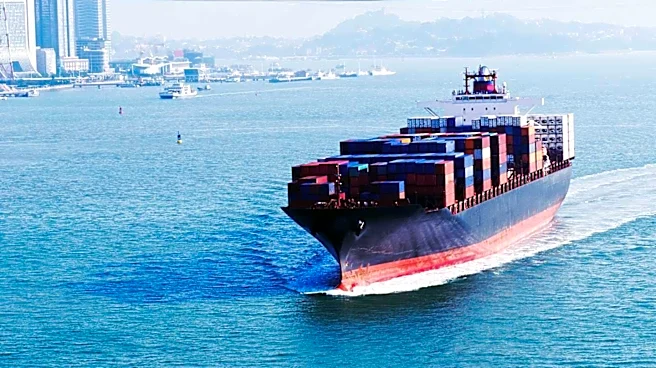
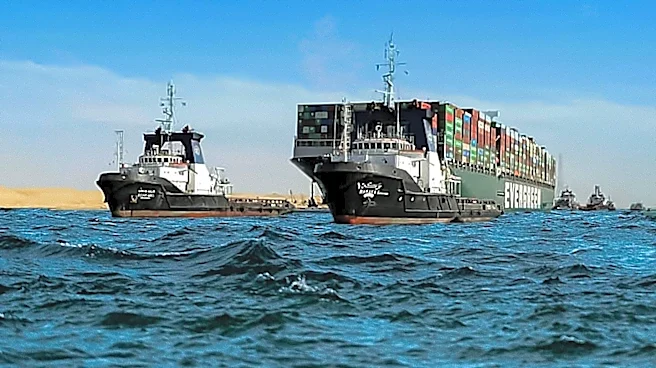
Maersk, a leading global container shipping company, has announced the resumption of its Middle East-to-U.S. East Coast service through the Suez Canal. This decision marks a significant shift back to the trans-Suez route, which had been largely abandoned
by shipping companies due to security concerns in the Red Sea, particularly attacks by Yemen's Houthis. The change is expected to improve westbound transit times by an average of seven days and eastbound sailings by up to 14 days. Maersk's decision is part of its Gemini cooperation network with Germany's Hapag-Lloyd, indicating a strategic move to restore efficiency in its shipping routes.
Why It's Important?
The resumption of the Suez Canal route by Maersk is significant for global shipping logistics, particularly for trade between the Middle East and the U.S. East Coast. The improved transit times can enhance supply chain efficiency, reduce shipping costs, and potentially lower prices for consumers. This move also signals a possible stabilization in the region, encouraging other shipping companies to reconsider their routes. The decision could have broader implications for international trade, as faster shipping times can lead to increased competitiveness and economic benefits for businesses relying on timely deliveries.
What's Next?
As Maersk resumes its Suez Canal operations, other shipping companies may follow suit, potentially leading to a resurgence of the Asia-Europe trade corridor through the canal. This could result in increased traffic and economic activity in the region. Stakeholders, including port authorities and logistics companies, will likely monitor the situation closely to assess the security and economic impacts. Additionally, the geopolitical dynamics in the Red Sea region will continue to influence shipping decisions, with companies weighing the risks and benefits of returning to traditional routes.