

What's Happening?
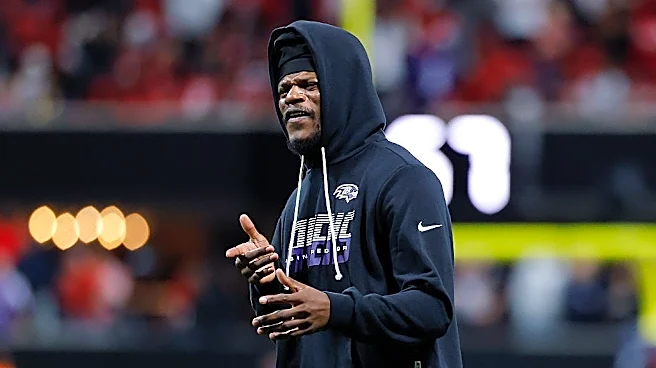
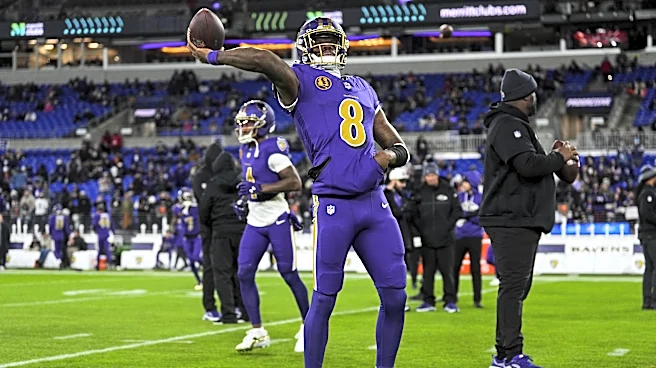
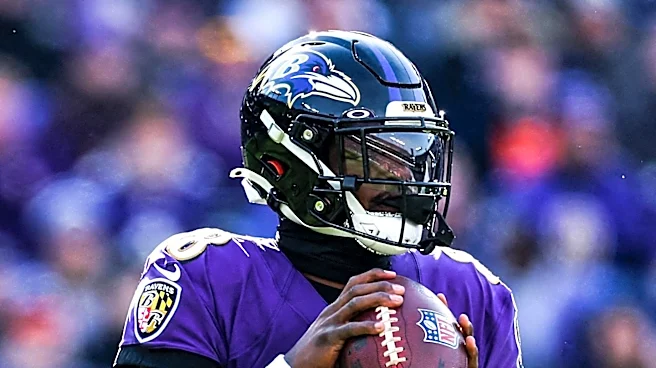
Former NFL player Shannon Sharpe has expressed bewilderment regarding reports that Baltimore Ravens quarterback Lamar Jackson intends to return to play before the end of the current season. Jackson suffered a dislocated and broken thumb earlier in the campaign,
an injury initially projected to sideline him for 6-10 weeks. Prior to his injury, Jackson led the Ravens to a 4-1 record in the five games he started. However, since his absence, the team's performance has significantly declined, resulting in a 4-6 season record and placing them last in the AFC North. Sharpe, speaking on the Nightcap podcast, suggested that if he were Jackson, he would prioritize full recovery and not return until the next season, given the team's current poor standing and unlikely postseason prospects.
Why It's Important?
Lamar Jackson's potential return carries significant implications for both the Baltimore Ravens and the broader NFL landscape. For the Ravens, a premature return could risk further injury to their star quarterback, jeopardizing his long-term career and the team's future prospects. His absence has clearly demonstrated his value to the team, as their performance has plummeted without him. From a player's perspective, Sharpe's comments highlight the strategic decision-making athletes face when balancing loyalty to their team with personal health and career longevity, especially when playoff hopes are dim. This situation also brings into focus the pressure on injured star players to return, even when it might not be in their best interest, and the potential impact on team morale and future contract negotiations.
What's Next?
The Baltimore Ravens are scheduled to face the Carolina Panthers on November 22. The decision regarding Lamar Jackson's return will likely hinge on his recovery progress and the medical team's assessment of his thumb injury. If Jackson does attempt to return, it will be closely watched to see if he can regain his previous form and if his presence can significantly alter the Ravens' trajectory in the remaining games. Conversely, if he follows Sharpe's advice and opts to sit out the rest of the season, the team will continue to rely on its backup quarterbacks, potentially focusing on player development and preparing for the next season. The outcome of this decision will influence the team's immediate performance and strategic planning for the upcoming offseason.
Beyond the Headlines
This situation extends beyond immediate game results, touching upon the complex dynamics between professional athletes, team management, and fan expectations. The debate over whether Jackson should return reflects a broader conversation in sports about player welfare versus competitive drive. There's an inherent tension between a player's desire to compete and the long-term health considerations that could impact their career. Sharpe's strong stance also underscores the evolving perspective on player empowerment, where athletes are increasingly encouraged to make decisions that prioritize their well-being. This scenario could influence how other teams and players approach similar injury situations in the future, potentially shifting the balance towards more cautious returns, especially when a team's playoff chances are minimal.