



What's Happening?
Aqua jogging, a form of aqua fitness, involves running or walking in water, either in shallow water with foot contact or in deep water using a flotation belt. This exercise provides cardiovascular conditioning with significantly less pressure on bones,
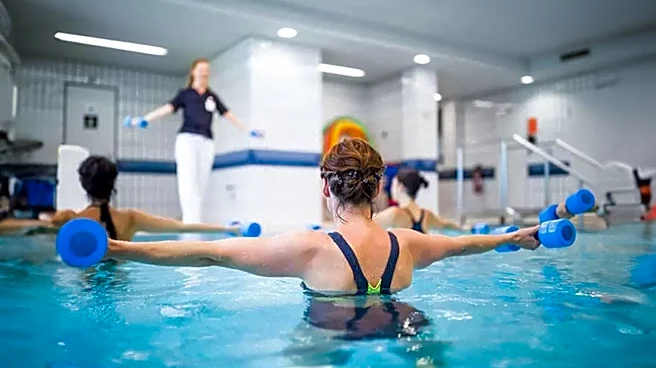
joints, and muscles compared to land-based activities. The water's resistance also enhances posture and controlled movement. Participants can adjust the intensity by changing water depth, cadence, stride, arm action, and work-to-rest intervals. While shallow water offers a grounded introduction, deep water emphasizes flotation, balance, and continuous resistance. Equipment such as flotation belts for deep water and water-running footwear for shallow water can enhance comfort and effectiveness, though no single item is mandatory. Aqua jogging can be a standalone workout or part of a broader pool routine, offering a unique technique distinct from general water aerobics which often combines various movements.
Why It's Important?
Aqua jogging is particularly important for individuals seeking low-impact exercise options, including runners looking for cross-training, swimmers adding variety to their routines, beginners easing into pool exercise, and anyone aiming to reduce stress on their joints. The buoyancy of water supports body weight, mitigating the impact that can lead to injuries in land-based exercises. This makes it an ideal activity for injury recovery, as highlighted by a 2014 review in Sports Health, which describes aqua running as beneficial for injured athletes and those seeking a low-impact aerobic workout. The resistance provided by water also contributes to strength building and improved posture, offering a comprehensive workout that benefits overall physical health without the typical wear and tear on the musculoskeletal system. This accessibility makes it a valuable fitness option for a wide demographic.
What's Next?
Individuals interested in aqua jogging can start by exploring local aquatic centers or fitness facilities that offer aqua fitness classes. Beginners are advised to start in waist-high water to become comfortable with the movement before progressing to deeper water, potentially utilizing flotation belts for support. As confidence and technique improve, participants can experiment with different water depths and incorporate resistance gear to increase the challenge. It is recommended to build a session around a gradual warm-up, a defined work period, easy recovery, and a cooldown. For those recovering from injuries, consulting a medical professional is crucial to guide exercise choices. The continuous nature of aqua jogging allows for progressive intensity adjustments, ensuring sustained engagement and fitness improvement.
Beyond the Headlines
The growing popularity of aqua fitness, including aqua jogging, reflects a broader societal shift towards more sustainable and joint-friendly exercise regimens. As awareness of long-term joint health increases, low-impact activities like aqua jogging are gaining traction, offering an alternative to high-impact sports that can lead to chronic issues. This trend also highlights the versatility of water as a fitness medium, moving beyond traditional swimming to encompass a wider range of therapeutic and conditioning exercises. The emphasis on controlled movement and posture in aqua jogging also contributes to improved body awareness and functional strength, which are crucial for daily activities and preventing falls, especially in older populations. This approach to fitness underscores a holistic view of well-being, prioritizing longevity and injury prevention alongside cardiovascular and muscular development.