





What's Happening?
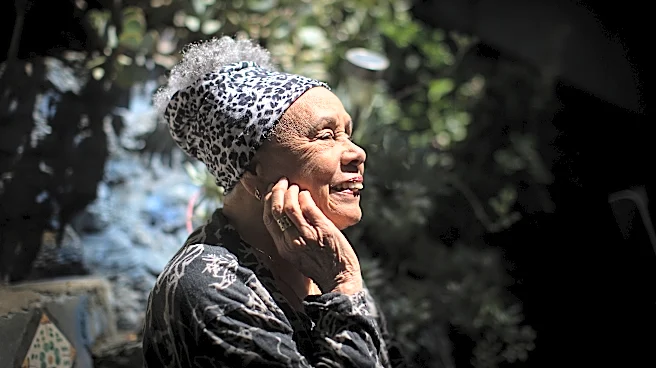
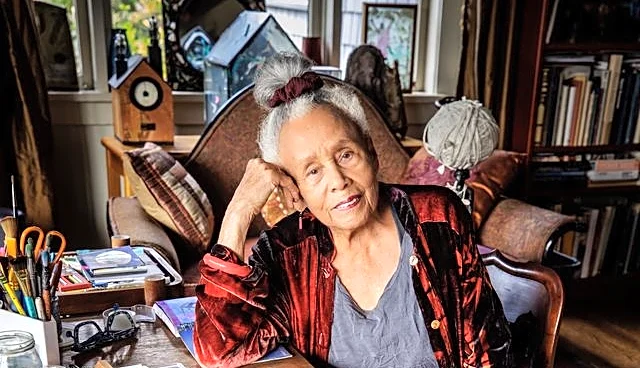
Betye Saar, a renowned artist known for her assemblages that challenged racist depictions of Black women, has died at the age of 99. Born in Los Angeles in 1926, Saar initially studied design at UCLA and worked as a social worker before discovering printmaking.
Her career took a significant turn after being inspired by an exhibition of Joseph Cornell's work in 1967, leading her to create assemblages using found materials. Following the assassination of Martin Luther King Jr. in 1968, Saar's work became more politically charged. Her 1972 piece, 'The Liberation of Aunt Jemima,' transformed a stereotypical figure into a symbol of resistance, sparking the Black women's movement. Saar's influence extended through her teaching roles in California universities, where she mentored future artists like Kerry James Marshall.
Why It's Important?
Betye Saar's work has had a profound impact on the art world and beyond, particularly in how it addressed and challenged racial stereotypes. Her assemblages not only provided a platform for political expression but also inspired a generation of artists to use their work as a form of protest and social commentary. Saar's ability to transform everyday objects into powerful statements on race and identity has left a lasting legacy, influencing both the Black Arts Movement and contemporary art practices. Her work continues to be celebrated in major exhibitions, highlighting its enduring relevance in discussions about race, identity, and empowerment.